Architectural Scale Model with LED Lighting System
Introduction
A standard architectural model is informative.
But an illuminated model is unforgettable.
Light brings a miniature building to life.
It shows interior spaces, highlights key zones, and creates drama.
That is why more architects and developers choose an Architectural Scale Model with LED Lighting.
This guide covers everything.
From types of LEDs to installation, from costs to maintenance.
Let us begin.
What Is an Architectural Scale Model with LED Lighting?
It is a physical scale model of a building or site.
Embedded with tiny, energy‑efficient LED lights.
An Architectural Scale Model with LED Lighting can illuminate windows, streetlights, parking lots, pools, and signage.
Unlike external spotlights, internal LEDs create a warm, realistic glow.
The result is a model that works in both day and night modes.
Day mode shows form and material.
Night mode reveals the building’s soul.
Why Add LED Lighting to Your Scale Model?
Lighting adds depth, emotion, and clarity.
An Architectural Scale Model with LED Lighting helps viewers understand interior layouts through lit windows.
It guides the eye to important zones like lobbies, emergency exits, or retail spaces.
For residential projects, lit windows make the development feel alive.
For commercial towers, a glowing crown creates a landmark identity.
Also, illuminated models photograph beautifully.
Your marketing team can capture stunning night shots for brochures and websites.
Key Types of LED Lighting for Architectural Models
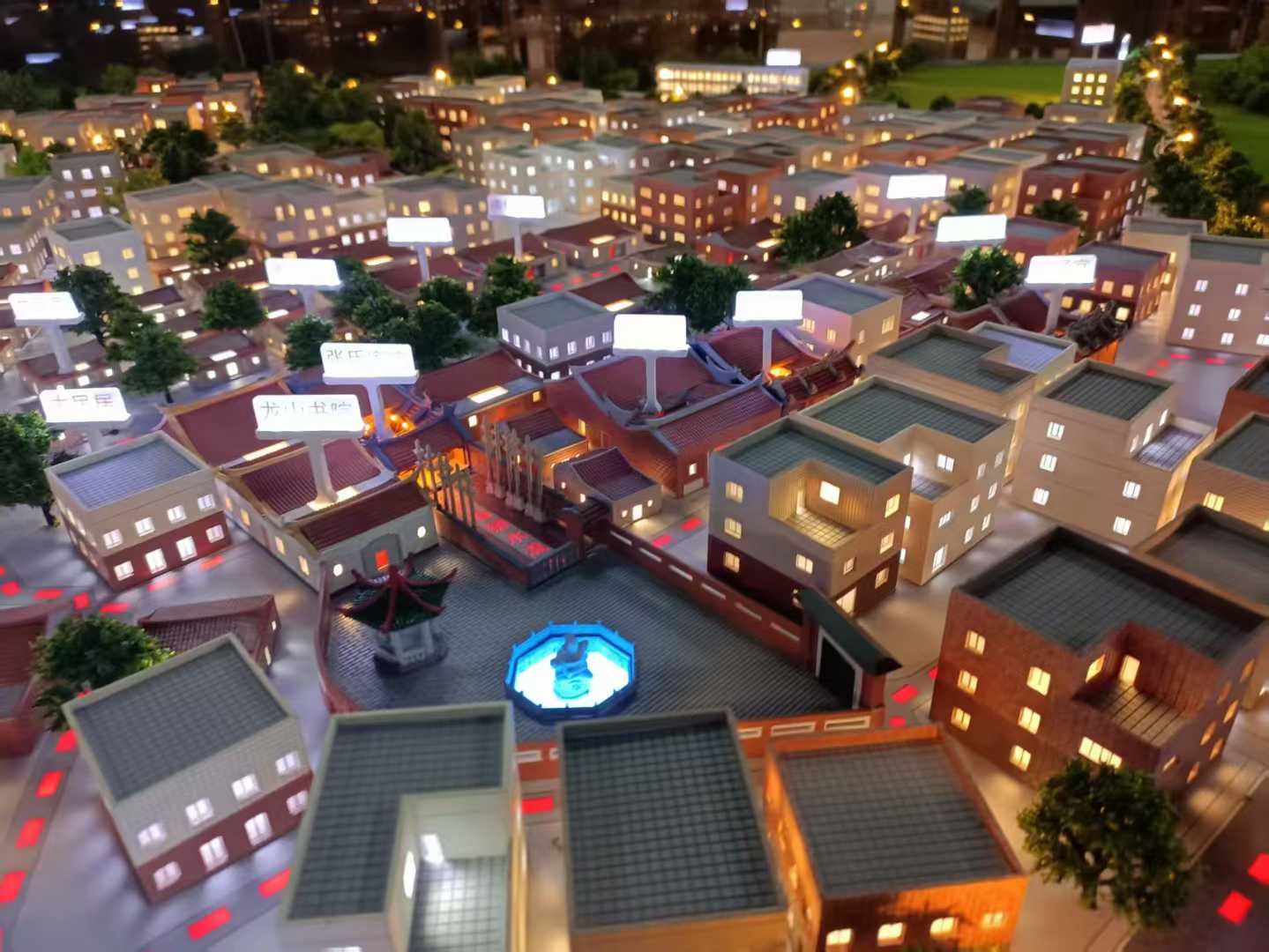
Let us break down the most common LED applications.
Interior Building Lights
Warm white LEDs placed behind acrylic windows.
Simulates offices, hotel rooms, or apartments at night.
Streetlights and Path Lights
Tiny LEDs on thin poles along roads and walkways.
Often powered by a separate circuit.
Accent and Feature Lights
Blue LEDs for swimming pools and fountains.
Colored lights for signage or special zones (use sparingly).
Crown and Rooftop Lighting
LED strips along roof edges or on antennas.
Creates a dramatic skyline effect.
Zoned and Programmable Lighting
Different zones light up separately via switches or remote control.
Ideal for presentations – show only the phase you are discussing.
A well‑designed Architectural Scale Model with LED Lighting uses a combination of these.
Materials and Components for LED Integration
Professional model makers use miniature, low‑heat LEDs.
Micro LED chips (0402 or 0603 size) – As small as 1mm x 0.5mm.
Flexible LED strips – Cuttable, adhesive‑backed, for straight runs.
Fiber optic strands – For pinpoint lights like streetlamps or car headlights.
Thin gauge wire (30 AWG) – Almost invisible when painted.
Battery packs or DC adapters – For portable or permanent power.
Remote controllers – For on/off, dimming, or zone selection.
Diffusion materials – Translucent acrylic or frosted film to soften light.
Each component is chosen for reliability and tiny size.
The final Architectural Scale Model with LED Lighting has no visible wires or hot spots.
The Installation Process: Step by Step
How are LEDs added to a scale model?
Here is the typical workflow.
Step 1: Lighting Plan
The model maker reviews your blueprints.
They decide where each LED goes – windows, streetlights, pool, signage.
A wiring diagram is created.
Step 2: Model Fabrication with Wiring Channels
During building construction, channels are cut into the base and walls.
Wires are laid before final assembly.
This keeps everything hidden.
Step 3: LED Placement
Micro LEDs are glued into window openings.
For streetlights, tiny holes are drilled in the base.
Fiber optics are threaded up through hollow poles.
Step 4: Electrical Connection
All wires are soldered to a central bus.
Resistors are added to prevent overcurrent.
The circuit is tested.
Step 5: Final Assembly and Concealment
Facades are attached over the LEDs (with openings for light).
The base is finished with sand or texture, hiding all wires.
A battery pack or wall plug is attached underneath.
Step 6: Testing and Adjustments
The model is turned on in a dark room.
Brightness and color are checked.
Any dark spots are corrected.
A custom Architectural Scale Model with LED Lighting typically adds 1–2 weeks to the build time.
Cost Factors for LED Lighting
Adding LEDs increases the model cost.
Number of LEDs – 20 LEDs vs. 200 LEDs.
Type of LEDs – Simple strips are cheaper than individual micro LEDs.
Programming complexity – Single on/off vs. multiple zones with remote.
Power source – Battery pack (cheap) vs. hardwired adapter (more reliable).
Installation complexity – Retrofitting LEDs into an existing model is expensive.
Typical additional cost: 5,000+ for complex, zoned lighting with hundreds of LEDs and remote control.
For a complete Architectural Scale Model with LED Lighting, total model cost including lighting ranges from 30,000 depending on size and detail.
Benefits for Different Project Types
Residential Communities
Lit windows make homes feel occupied.
Path lights guide the eye through the development.
Commercial Buildings
A glowing crown and lit lobby create a prestigious image.
Leasing tenants see the building as active.
Industrial Facilities (Secondary keyword)
For an Industrial Building Architectural Sand Table Model, LEDs can highlight security zones, emergency exits, or truck queuing lanes. Functional, not just decorative.
Exhibition Halls (Secondary keyword)
An Exhibition Hall Architectural Sand Table Model often uses programmable lighting to guide visitors through a museum or trade show display.
Hotels (Secondary keyword)
A Hotel Building Architectural Scale Model with lit guest rooms and pool lights sells the hospitality experience.
Campuses (Secondary keyword)
A Campus Building Architectural Sand Table Model can use LEDs to show building occupancy or highlight donor‑named structures.
Hospitals (Secondary keyword)
A Hospital Architectural Scale Model can use colored LEDs to differentiate departments (blue for ICU, green for surgery) and show emergency routes.
Case Study: Illuminated Model Wins Planning Approval
A developer proposed a 30‑story mixed‑use tower in a historic district.
Neighbors were concerned about nighttime light pollution and the tower’s visual impact.
The developer commissioned an Architectural Scale Model with LED Lighting that could switch between day and night modes.
At night, the model showed warm, dimmed windows and a softly lit crown.
Community board members saw that the tower would not be a glaring eyesore.
The project was approved with conditions.
The lighting system cost 200,000 in legal fees.
Display Tips for Illuminated Models
To maximize the impact of your LED‑lit model:
Dim the room lights – The glow should be the main light source.
Use a dark or black base – Reflections from a white base distract.
Provide a remote control – Let viewers switch modes themselves.
Add a legend – Explain what each color or lit zone represents.
Maintenance and Repair
LEDs are long‑lasting, but failures happen.
Check batteries regularly – If using battery packs, replace yearly.
Inspect for loose wires – After transport, a wire may disconnect.
Replace burnt LEDs – A professional can solder a new one. Avoid DIY if unskilled.
Clean acrylic windows – Dust dims light output. Use compressed air.
Most model makers offer a 1‑year warranty on lighting.
Common Mistakes to Avoid
Do not use cheap, bright white LEDs.
Warm white (2700K–3000K) looks natural. Cool white (6000K) looks like an operating room.
Do not over‑light.
Too many LEDs create a Christmas tree effect. Subtlety is key.
Do not forget resistors.
LEDs without resistors burn out quickly.
Do not use glue that fogs acrylic.
Super glue vapors can cloud windows around LEDs.
Do not place LEDs directly behind thin paint.
The paint may glow unevenly. Use a diffuser.
Future Trends in Model Lighting
LED technology is evolving fast.
Addressable RGB LEDs – Change colors for different presentations.
Wireless inductive power – No visible wires at all.
Solar‑assisted batteries – For outdoor display models.
Motion‑activated lighting – LEDs turn on when someone approaches.
However, the core remains.
A well‑lit architectural model captures attention and communicates design intent better than any unlit model.
Conclusion
An Architectural Scale Model with LED Lighting transforms a static miniature into a dynamic storytelling tool.
It highlights key features, creates emotional impact, and helps win approvals.
From a few warm windows to a fully zoned, programmable system, lighting adds value far beyond its cost.
Choose an experienced model maker who understands electrical integration.
Plan your lighting zones early in the design process.
Invest in quality warm‑white LEDs and proper diffusion.
Your clients will remember the model that glowed.
And remember – whether you need an Industrial Building Architectural Sand Table Model for a logistics center, an Exhibition Hall Architectural Sand Table Model for a museum, a Hotel Building Architectural Scale Model for a resort, a Campus Building Architectural Sand Table Model for a university, or a Hospital Architectural Scale Model for a medical facility, LED lighting enhances every type.


