Custom Museum Exhibition Sand Table Model
Introduction
Museums are where history meets the public.
A static display board informs.
A physical model inspires.
When you add interactive lighting and durable construction, you create an unforgettable exhibit.
That is a Custom Museum Exhibition Sand Table Model.
This guide explains why museums invest in custom sand table models.
What features make them exhibition‑ready.
And how to get one built for your institution.
Let us begin.
What Is a Custom Museum Exhibition Sand Table Model?
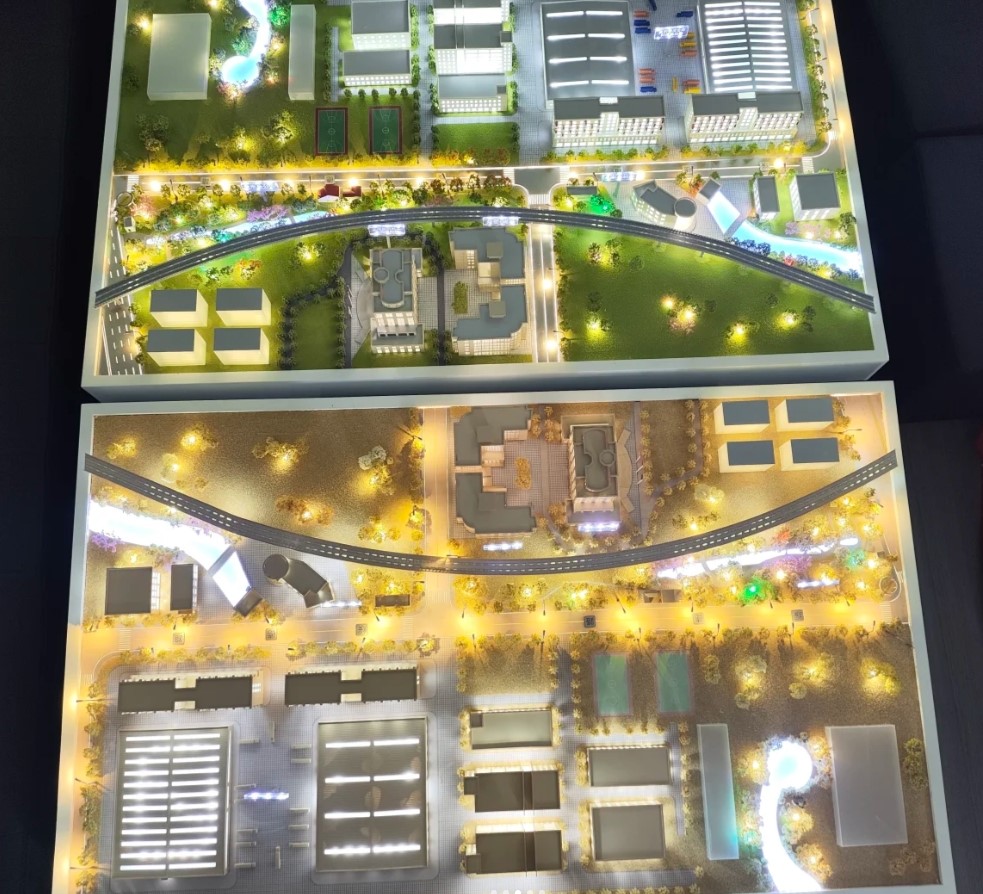
It is a large‑scale, durable physical miniature of a city, historical site, or region.
Designed specifically for public display in museums, science centers, or visitor attractions.
A Custom Museum Exhibition Sand Table Model emphasizes storytelling.
It shows urban evolution, transportation history, or ecological change.
Unlike a planning model used in an office, a museum model must:
Withstand thousands of visitors.
Be legible from a distance.
Include interactive elements (push‑buttons, LEDs, touch screens).
Have a protective railing or acrylic cover.
Why Museums Choose Custom Sand Table Models
Museum visitors remember what they see and touch.
A Custom Museum Exhibition Sand Table Model creates a focal point.
It helps visitors understand:
How their city grew from a small settlement to a metropolis.
Where historical events took place.
How transportation shaped the region.
Interactive models increase dwell time and encourage family engagement.
They also become photo opportunities – free marketing on social media.
Key Features of a Museum‑Ready Sand Table Model
Let us break down what makes a model suitable for public exhibition.
Durable Construction
Reinforced base (aluminum honeycomb or thick MDF).
Buildings securely glued.
Low acrylic railing to prevent touching while allowing viewing.
Acrylic cover for dust protection when not in use.
Large Scale but Readable
Scale typically 1:500 to 1:5,000.
Landmarks and major roads visible from 1 meter away.
Clear Legend and Labels
Large, easy‑to‑read text.
Icons instead of words where possible.
Legend panel separate from the model, at reading height.
Interactive Elements
Push‑button LEDs that highlight different historical eras.
Touch screen with archival photos and videos.
QR codes linking to online collections.
Storytelling Focus
Not every pipe and utility line is shown.
Emphasis on big stories: immigration, industry, transit, natural environment.
Accessibility
Model at waist height for children and wheelchair users.
Even, glare‑free lighting.
The Production Process for a Museum Exhibition Model
A professional Custom Museum Exhibition Sand Table Model follows a rigorous workflow.
Step 1 – Exhibition Narrative and Data Collection
Museum curators define the story (e.g., “growth of the port from 1800 to today”).
You provide historical maps, GIS data, and reference images.
Step 2 – Digital Modeling and Prototyping
A digital 3D model is created from your data.
You approve the layout, historical layers, and interactive zones.
Order an Architectural Sand Model Sample Custom first to verify scale and materials. This small test piece ensures the final model meets your standards.
Step 3 – Precision Fabrication
Laser cutting – Cuts building footprints, roads, and water bodies.
CNC machining – Shapes terrain.
3D printing – Produces landmarks and interactive elements.
A Factory Direct Architectural Scale Model approach keeps costs lower by eliminating middlemen.
Step 4 – Hand Assembly and Finishing
Skilled artisans assemble components.
Water‑based eco‑friendly paints are used.
Historical colors are matched to archival references.
Step 5 – Interactive Installation
Programmable LEDs, push‑buttons, and touch screens are embedded.
Wires hidden under the base.
Multiple lighting zones for different eras.
Step 6 – Quality Control
Every component is checked for durability and finish.
Lighting and interactivity tested.
Step 7 – Protective Packaging and Global Shipping
Model placed under a clear acrylic cover.
Packed in a reinforced wooden crate with foam cushioning.
ISPM‑15 compliant for international shipping.
Step 8 – On‑Site Setup
A technician can be sent for installation.
Low acrylic railing installed around the model.
Five Complementary Services for Museum Exhibitions
1. Factory Direct Architectural Scale Model – Cost Savings
Factory Direct Architectural Scale Model sourcing removes agent fees.
For museum budgets, this is essential.
2. Custom Landscape Sand Table Model – Natural History Focus
If your museum exhibits a national park or ecological region, a Custom Landscape Sand Table Model emphasizes terrain, vegetation, and water features.
It pairs well with urban history models.
3. Architectural Sand Model Sample Custom – Test Before Full Production
Before committing to a large museum model, order an Architectural Sand Model Sample Custom.
A small sample lets you test materials, colors, and lighting at low risk.
4. Large Project Sand Table Model OEM – Multiple Museum Networks
If your museum has multiple branches or a traveling exhibition, a Large Project Sand Table Model OEM service can produce identical models for all locations at volume discounts.
5. Sand Table Model Custom for Design Firm – For Exhibit Designers
Exhibit design firms often commission models for their museum clients.
A Sand Table Model Custom for Design Firm bridges the gap between curator vision and manufacturer execution.
Materials for Museum Exhibition Models
ABS plastic – Durable building massing.
Cast acrylic – Clear for water features.
Epoxy resin – Realistic rivers and lakes.
Flocking – Grass and vegetation.
UV‑stable paints – Colors that do not fade under museum lighting.
Low‑voltage LEDs – Safe for public interaction.
Acrylic railing – Protects the model without blocking views.
Case Study: Museum Model Doubles Attendance
A regional history museum replaced a static map with a Custom Museum Exhibition Sand Table Model at 1:2,000 scale, covering 3m x 2.5m.
Push‑button LEDs lit up three eras: 1850 (amber), 1950 (warm white), and today (cool white with blue transit lines).
A touch screen displayed historical photos for each era.
Visitor engagement increased by 200%.
School groups used the model for field trips.
The museum won a regional exhibit award.
Cost Factors for Museum Exhibition Models
Area covered – Larger tables cost more.
Interactivity – Static vs. push‑button LEDs vs. touch screen.
Historical layers – Single era vs. multiple removable overlays.
Durability – Standard vs. reinforced for heavy public use.
Packaging and shipping – Adds 10–20%.
Typical range: 120,000 for a large, highly interactive model with multiple eras and touch screen.
How to Choose a Manufacturer for Museum Projects
Use this checklist.
Experience with museum or public exhibition models – Request photos.
Durability focus – Ask about materials and railing design.
Interactivity capability – LEDs, push‑buttons, touch screens.
Export experience – For international shipping.
References – Call past museum or exhibition clients.
Common Mistakes to Avoid
Do not make the legend too small or technical.
Use simple icons and large text.
Do not place the model in a dark corner.
Museum lighting must be even and glare‑free.
Do not allow direct touching without a railing.
A low acrylic railing protects the model.
Do not forget accessibility.
Waist height for wheelchairs and children.
Future Trends in Museum Sand Table Models
Augmented reality integration – Scan the model to see archival photos or future renders.
Live data feeds – LEDs showing real‑time transit or air quality.
Modular sections – Swap out zones as exhibitions change.
Sustainable materials – Recycled acrylic and biodegradable flocking.
Conclusion
A Custom Museum Exhibition Sand Table Model transforms your exhibit into an immersive, memorable experience.
It educates, engages, and inspires visitors of all ages.
Start with an Architectural Sand Model Sample Custom to test quality.
Save costs with Factory Direct Architectural Scale Model sourcing.
Add natural landscapes with Custom Landscape Sand Table Model if needed.
For museum networks, use Large Project Sand Table Model OEM for multiple units.
And if you are an exhibit design firm, order a Sand Table Model Custom for Design Firm to present to your museum clients.
Contact a manufacturer today.
Share your exhibition narrative.
Get a custom museum quote.


