Architectural Sand Model for Academic Research
Introduction
Academic research needs physical evidence.
Digital simulations are powerful, but they remain abstract.
A tangible model can reveal patterns that screens hide.
That is the value of an Architectural Sand Model for Academic Research.
This guide explains how researchers use these models.
What to look for when commissioning one.
And why they remain essential in the age of AI.
Let us begin.
What Is an Architectural Sand Model for Academic Research?
It is a physical miniature of a building, landscape, or urban area.
Built for study, not for sales.
An Architectural Sand Model for Academic Research is designed for repeated manipulation.
Researchers may add and remove elements.
They may test lighting, airflow, or pedestrian flow.
Unlike a polished marketing model, this one prioritizes functionality and flexibility.
Materials are durable.
Parts are often modular.
The model serves as a laboratory in miniature.
Why Academic Research Still Needs Physical Models
Digital models offer speed and data.
But physical models offer something else: serendipity.
You notice relationships you did not program.
You see shadows shift in real time.
You understand scale by walking around.
An Architectural Sand Model for Academic Research bridges the gap between abstract data and real‑world perception.
It is used in architecture schools, urban planning departments, environmental science labs, and engineering research centers.
Key Features of a Research‑Focused Sand Model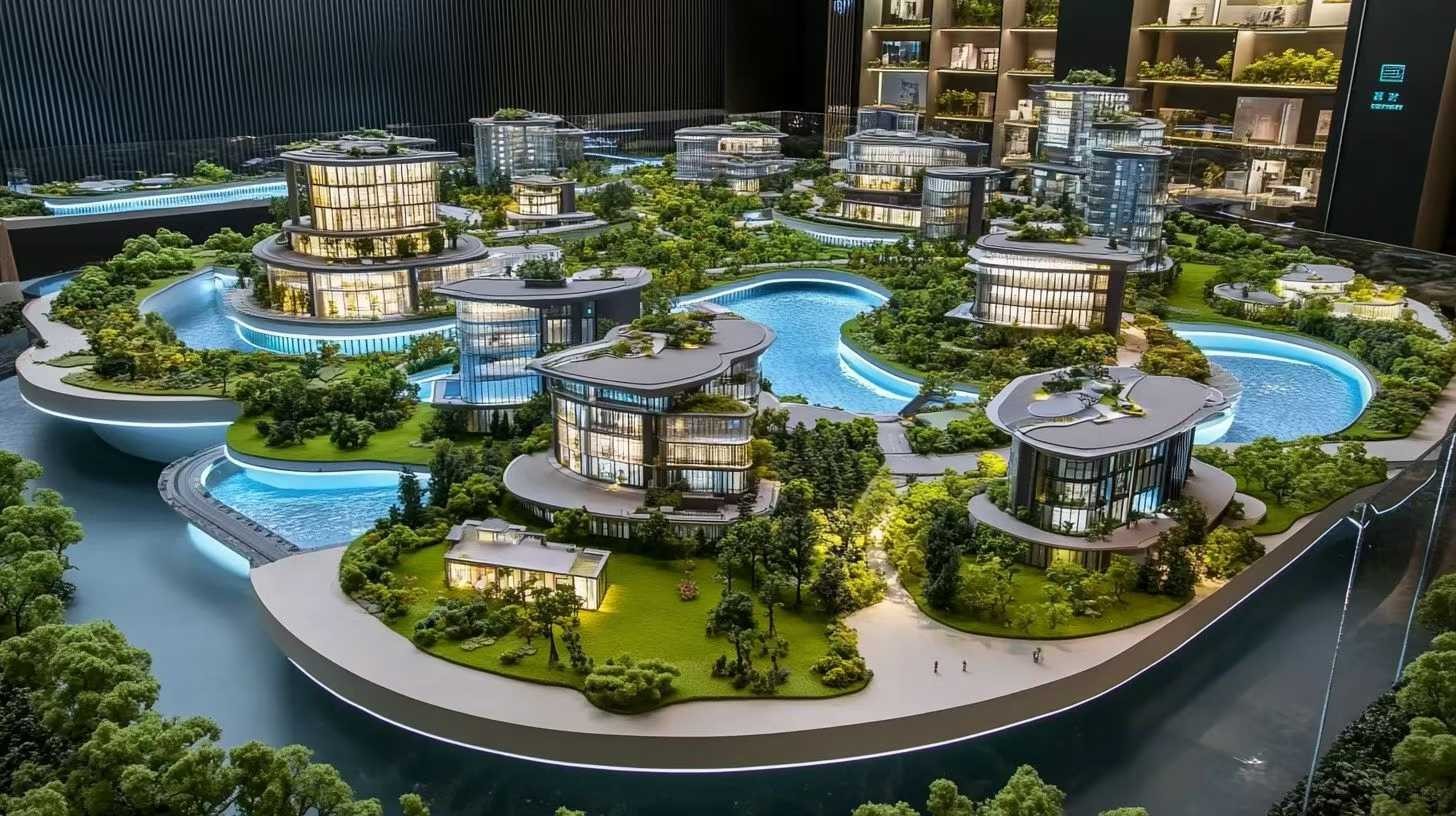
Let us break down what makes a model suitable for academic work.
Modular Construction
Buildings, trees, and infrastructure elements are removable.
Researchers can test different scenarios quickly.
Durability for Repeated Handling
The model will be touched, moved, and modified often.
Materials must withstand years of use.
Clear Labeling and Grid System
A coordinate grid on the base allows precise documentation.
Researchers can note exact locations of changes.
Interchangeable Scenarios
Different surface overlays (e.g., flood maps, traffic patterns) can be placed on the same base.
Compatibility with Digital Tools
The physical model can be scanned via photogrammetry.
Results are compared with digital simulations.
Neutral Aesthetics
No bright colors or heavy landscaping – these distract from research questions.
A well‑designed Architectural Sand Model for Academic Research is a tool, not a trophy.
Materials for Academic Research Models
Research models emphasize durability and modifiability.
Laser‑cut MDF – For building blocks. Strong and cheap.
3D printed PLA – For custom or complex parts.
Magnetic base with metal plates – Allows instant repositioning of elements.
Clear acrylic – For studying light transmission.
Velcro or tacky surfaces – For temporary attachments.
White or grey paint – Neutral, non‑distracting.
Avoid fragile materials like thin resin or delicate flocking.
The Custom Production Process for Academic Models
How is a research sand table model made?
Here is the typical workflow for a university lab.
Step 1: Define Research Questions
What hypotheses will the model test?
Sunlight studies, pedestrian flow, flood simulation?
The design follows the science.
Step 2: Select Scale and Extent
A small site (1:100) for detailed building studies.
A large district (1:500) for urban heat island research.
Balance detail with coverage.
Step 3: Modular Base Design
The base has a grid and attachment points.
Buildings are designed to be lifted and swapped.
Step 4: Fabrication of Core Elements
Permanent features (topography, roads) are built first.
Removable buildings are fabricated as separate units.
Step 5: Testing and Adjustment
Researchers use a prototype section.
Feedback leads to design changes before full production.
Step 6: Delivery and Documentation
The model is delivered with a manual.
Digital files of each part are provided for future reprinting.
A custom Architectural Sand Model for Academic Research typically takes 6 to 12 weeks, depending on complexity.
Applications in Academic Research
Where are these models used in universities?
Urban Heat Island Studies
Researchers place temperature sensors on different surfaces.
They test how tree placement affects local temperatures.
Daylight and Shadow Analysis
Physical model under an artificial sun (movable lamp).
Measure illuminance at different times of year.
Pedestrian and Evacuation Simulation
Tiny colored blocks represent people.
Researchers test exit placement and corridor widths.
Flood and Water Runoff Experiments
The model base is sealed.
Water is poured to test drainage and flood risk.
Wind and Ventilation Testing
In a wind tunnel or with smoke pencils.
Observe airflow around buildings.
Educational Demonstrations for Design Institutes
An Architectural Sand Table Model for Design Institute can be used across multiple courses – urban design, environmental technology, and building physics.
Case Study: Research Model Reveals Flaw in Digital Simulation
A university research team studied outdoor thermal comfort in a new plaza.
Digital simulations predicted good performance.
They built an Architectural Sand Model for Academic Research at 1:200 scale.
Using a heat lamp and small sensors, they discovered that a proposed canopy cast shade on the wrong seating area.
The digital model had mis‑calculated sun angles due to a software bug.
The physical model caught the error.
The design was corrected before construction.
The model cost 500,000 in post‑construction retrofits.
Cost Factors for Academic Research Models
Size – 1m x 1m vs. 2m x 3m.
Modularity – Fixed buildings vs. fully removable elements.
Interchangeable parts – Multiple surface overlays add cost.
Durability requirements – Heavy‑duty materials for years of handling.
Sensors or instrumentation – Embedded thermocouples or light sensors.
Typical range: 30,000 for a large, highly modular model with sensor integration.
How to Choose a Model Maker for Academic Projects
Experience with research models – Not just marketing displays.
Modular design capability – Elements must be easy to remove and replace.
Understanding of scale and grid systems – Essential for data collection.
References from university clients – Call two.
Ask for a sample of a modular building block that snaps into place.
Maintaining and Evolving the Model
Research models are living tools.
Document every change – Keep a log of modifications.
Reprint missing or broken parts – The maker should provide digital files.
Clean with compressed air – Never wet clean.
Store spare parts in labeled bins – So future researchers can reconstruct earlier versions.
Common Mistakes to Avoid
Do not make the model too beautiful.
Research models need neutral, distraction‑free aesthetics.
Do not glue everything down.
Modularity is key for hypothesis testing.
Do not choose a scale too small for instrumentation.
You cannot place a temperature sensor on a 2mm building.
Do not forget a grid.
Without coordinates, you cannot record precise locations of changes.
Do not ignore the research question during design.
A model for flood studies needs sealed edges; a model for sunlight needs removable roofs.
Integrating with Other Model Types for Broader Research
Academic research often spans multiple topics.
Different model types can support different studies.
A Tourism Resort Architectural Scale Model might be used in a hospitality management program to study wayfinding and guest flow.
An Eco Park Architectural Sand Table Model could serve environmental science research on habitat connectivity.
A Commercial Street Architectural Scale Model is ideal for retail behavior studies or pedestrian simulation.
A Low Carbon Building Architectural Sand Table Model supports engineering research on passive cooling and solar access.
A Smart City Building Architectural Scale Model allows computer science and urban planning researchers to test sensor networks in a physical environment.
Each model type opens new research avenues.
A well‑equipped lab might have several.
Future Trends in Academic Sand Table Models
Embedded sensors – Real‑time temperature, light, and humidity data loggers.
Automated module repositioning – Small motors move buildings for optimization experiments.
Augmented reality integration – Scan the model to see digital overlays of simulation results.
Open‑source design files – Universities share and modify model designs globally.
Yet the core remains.
Physical models reveal what digital models miss.
They will always have a place in academic research.
Conclusion
An Architectural Sand Model for Academic Research is a powerful scientific instrument.
It helps you see the unseen, test the untested, and teach the intangible.
Invest in modularity and durability.
Choose a maker who understands research needs.
Integrate the model with your digital workflow.
Your students will learn faster.
Your research will be more robust.
Your discoveries will have physical proof.
And remember – whether you need a Tourism Resort Architectural Scale Model for hospitality studies, an Eco Park Architectural Sand Table Model for ecology research, a Commercial Street Architectural Scale Model for retail behavior, a Low Carbon Building Architectural Sand Table Model for energy studies, or a Smart City Building Architectural Scale Model for urban tech experiments, each can be designed as a research tool. But for pure, hypothesis‑driven academic work, a general‑purpose architectural sand model is your foundation.


