Architectural Sand Table Model for Property Exhibition
Introduction
Property exhibitions are crowded.
Every developer wants attention.
Digital screens blend together.
Brochures end up in recycling bins.
But a physical model stops the crowd.
Specifically, an Architectural Sand Table Model designed for property exhibitions.
This guide covers everything you need.
From planning to display, from costs to maintenance.
Let us dive in.
What Is an Architectural Sand Table Model for Property Exhibition?
It is a miniature replica of a real estate project.
Built on a flat table with sand‑textured ground.
An Architectural Sand Table Model shows buildings, roads, parks, and public spaces.
It is placed in an exhibition booth or sales gallery.
Visitors can walk around it.
They can see the entire project in one glance.
Unlike a digital tour, this model is always on.
No screens, no waiting, no instructions.
Why Use a Sand Table Model at Property Exhibitions?
Exhibitions are noisy and distracting.
You have seconds to capture interest.
A large, well‑lit sand table model does that instantly.
People gather around it.
They point and ask questions.
An Architectural Sand Table Model creates conversation.
Your sales team can talk about specific units while pointing at the model.
Buyers understand the layout immediately.
Also, a model shows confidence.
You invested in a physical display.
That signals a serious, credible developer.
Key Features of an Exhibition‑Ready Sand Table Model
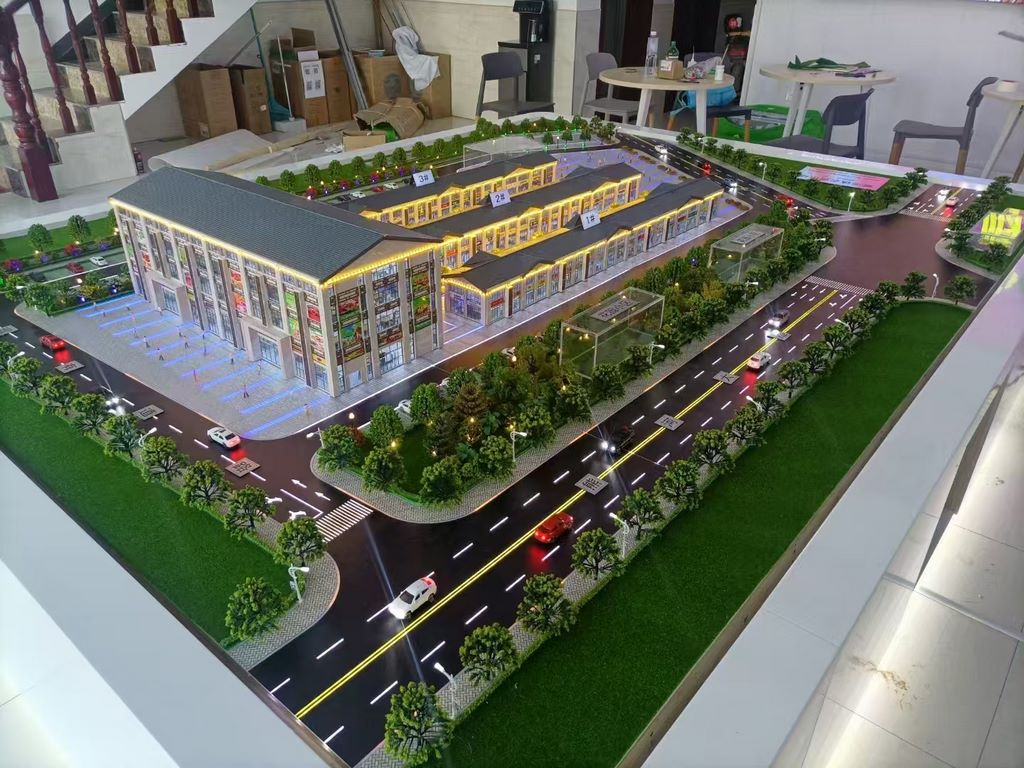
Let us break down what makes a model effective for exhibitions.
Appropriate Scale
Common exhibition scales: 1:100, 1:200, or 1:300.
For a large development, 1:300 fits on a 1m x 1m table.
For a smaller project, 1:100 shows more detail.
Clear Building Identification
Different building types have different colors or labels.
Residential vs. commercial vs. public facilities.
Unit availability can be highlighted with LEDs.
Realistic Landscaping
Trees, grass, water features, streetlights.
Tiny cars and people add life.
Landscaping makes the project feel real and desirable.
Durable Construction
Exhibition models are touched by hundreds of people.
The base must be strong.
Trees and small parts must be glued securely.
A clear acrylic dust cover is recommended.
Portable and Lightweight
Exhibition models are shipped and set up repeatedly.
The design should allow disassembly for transport.
A custom wheeled case is essential.
A well‑built Architectural Sand Table Model survives years of exhibitions.
Materials Used for Exhibition Sand Table Models
Professional makers choose durable, good‑looking materials.
Laser‑cut MDF or acrylic – For building walls and roofs.
3D printed resin – For complex shapes like curved towers.
Fine silica sand and textured paint – For ground surfaces.
Flocking and miniature trees – For landscaping.
LED strips – For lighting within buildings and streetlights.
Clear acrylic cover – For dust protection during transport.
Reinforced MDF base – For structural stability.
Each material is chosen to withstand repeated handling.
The final Architectural Sand Table Model looks great even after many shows.
The Creation Process: Step by Step
How is an exhibition sand table model made?
Here is the typical workflow.
Step 1: Project Review and Scale Selection
You provide site plans and building elevations.
The model maker studies the layout.
Scale is selected based on exhibition table size and budget.
Step 2: Base Construction
A strong MDF board is cut to size.
Sand or textured paint is applied.
Roads, sidewalks, and green spaces are marked.
Step 3: Building Fabrication
Each building is cut from acrylic or MDF.
Walls are assembled and painted.
Roof details and window patterns are added.
Step 4: Landscaping
Hundreds of miniature trees are glued.
Parks, fountains, and parking lots are detailed.
Street furniture (benches, lamps) is placed.
Step 5: Lighting Installation
LEDs are embedded in buildings and streetlights.
Wires run under the base to a central battery pack or plug.
A switch panel is hidden under the table edge.
Step 6: Quality Control and Exhibition Case
The model is dusted and inspected.
A clear acrylic cover is fitted.
The model is secured in a custom wheeled shipping crate.
A custom Architectural Sand Table Model for exhibitions typically takes 4 to 8 weeks.
Exhibition Display Tips for Maximum Impact
You have the model.
Now present it like a pro.
Use a Low Pedestal Table
The model should be at waist height.
Children and wheelchair users can see it easily.
A white or black tablecloth keeps focus on the model.
Install Directional Spotlights
Three or four spotlights from above.
Warm white light only – no colored or cool blue light.
Adjustable angles allow you to highlight specific zones.
Add a Simple Legend Panel
A small sign explaining colors and building types.
Keep text minimal – one sentence per building type.
Provide Magnifying Glasses and Business Cards
Visitors love zooming in on details.
Place a few magnifying glasses on the table edge.
Have business cards ready for leads.
Train Your Staff
Your team must know the model inside out.
They should point to units while explaining.
They should ask visitors which building they prefer.
A well‑displayed Architectural Sand Table Model generates qualified leads all day.
Cost Factors for Exhibition Sand Table Models
Pricing depends on several variables.
Table size – 1m x 1m costs less than 2m x 3m.
Number of buildings – 10 buildings vs. 50 buildings.
Detail level – Basic shapes vs. fully detailed facades with window mullions.
Landscaping density – Simple grass vs. detailed parks, trees, and water features.
Lighting complexity – No lighting vs. full interior and street lighting.
Shipping crate and cover – Add 20–30% of model cost.
Typical range: 35,000 for a large mixed‑use development with complex lighting.
Always ask for a quote that includes a shipping crate and spare parts kit.
How to Choose a Model Maker for Exhibition Projects
Not every model maker understands the rigors of exhibition travel.
Look for these qualities.
Portfolio of exhibition models – They should show models on trade show floors.
Close‑up photos – Can you see individual trees and window details?
Experience with modular designs – Models that break down for transport.
Shipping case craftsmanship – Ask to see their custom crates.
References from property developers – Call two.
Ask for a sample of a removable tree.
If it falls off easily, choose another maker.
Case Study: Sand Table Model Doubles Exhibition Leads
A developer in Dubai exhibited a new waterfront community.
In previous years, they used video walls.
Leads were low – only 50 per day.
They built an Architectural Sand Table Model at 1:200 scale.
The model showed the marina, the beach club, and five residential towers.
LEDs highlighted available apartments.
At the next exhibition, their booth was packed.
Visitors stayed for 5–10 minutes, asking questions.
Leads jumped to 120 per day.
The model cost $15,000.
The extra leads resulted in 15 more sales within three months.
That is the power of physical attraction.
Maintenance Tips for Exhibition Sand Table Models
Exhibition models take a beating.
Follow these care rules.
Before each show – Inspect for loose trees or buildings. Glue them back.
During the show – Dust with compressed air every morning.
After the show – Clean the acrylic cover with microfiber and glass cleaner.
Transport only in the custom crate – Never stack anything on top.
Store in a cool, dry room – Avoid extreme temperatures.
With care, your Architectural Sand Table Model will last 5–7 years of active exhibition use.
Common Mistakes to Avoid
Do not choose a scale that is too small.
1:500 makes buildings look like blocks – no emotional connection.
Do not forget a dust cover during transport.
Open models arrive at shows covered in dust and broken trees.
Do not use cheap glue.
It becomes brittle and trees fall off after one show.
Do not place the model in a corner of your booth.
Put it front and center – it is your best attraction.
Do not skip spare parts.
Bring extra trees, glue, and a small repair kit to every exhibition.
Related Architectural Model Types
While this guide focuses on exhibition models, you may need other specialized models for different projects or exhibition zones.
A High Rise Building Architectural Sand Model is perfect for a downtown skyscraper project. It emphasizes verticality and facade detail – ideal for a tall tower that needs to impress investors.
For a sales center that shows an entire master‑planned community, a Real Estate Display Architectural Sand Table Model works best. It is similar to an exhibition model but built for permanent installation.
If your exhibition booth targets modern architecture lovers, a Modern Architectural Scale Modeluses minimal landscaping and neutral colors. This style stands out in a sea of traditional models.
For high‑end residential projects, a Luxury Villa Sand Table Model is the right choice. Villas are shown at larger scales (1:50) with pools and gardens – perfect for boutique exhibitions.
Finally, for a shopping mall project, a Commercial Mall Architectural Scale Model focuses on interior circulation and tenant visibility. It is more complex than a typical residential model.
Each type serves a different exhibition goal. Choose the one that matches your project and audience.
Future Trends in Exhibition Sand Table Models
Technology is changing exhibition displays.
Interactive tablets – A small screen next to the model shows unit prices and availability when you tap a building.
Augmented reality overlays – Scan the model to see sunset views or traffic patterns.
Modular LED zones – Light up different phases of the development.
Sustainable materials – Recycled acrylic and bio‑resins for eco‑conscious brands.
However, the core remains.
Visitors love to gather around a physical model.
No screen can replace that human connection.
Conclusion
An Architectural Sand Table Model is the most powerful tool for property exhibitions.
It stops traffic, generates leads, and closes sales.
From the base construction to the final LED installation, every detail matters.
Choose a scale that shows enough detail.
Invest in durable materials and a custom shipping crate.
Display it with good lighting and trained staff.
If you are exhibiting at a property show, start the model process early.
Contact two or three reputable makers.
Request quotes and sample tiles.
Your next exhibition success starts with a model that wows.
And remember – whether you need a High Rise Building Architectural Sand Model for a skyscraper, a Real Estate Display Architectural Sand Table Model for a permanent sales center, a Modern Architectural Scale Model for a contemporary booth, a Luxury Villa Sand Table Model for high‑end buyers, or a Commercial Mall Architectural Scale Model for a retail project, the same exhibition principles apply. Start with a general architectural sand table model, then expand your collection.


