High Simulation Urban Planning Sand Model
Introduction
Some planning models are abstract.
Others are works of art.
A high‑simulation model falls into the second category.
Every tree, every window, every shadow looks real.
That is the power of a High Simulation Urban Planning Sand Model.
This guide explains what makes a model “high simulation.”
Why realism matters.
And how to get one for your city or project.
Let us begin.
What Is a High Simulation Urban Planning Sand Model?
It is a physical miniature of a city or district.
Built with obsessive attention to detail.
A High Simulation Urban Planning Sand Model goes beyond massing blocks.
Buildings have realistic facades – windows, mullions, roof details.
Trees are hand‑placed, each with unique shape.
Water features use clear resin with depth and ripples.
Unlike schematic planning models, this one looks like a photograph frozen in miniature.
The model is used for investor presentations, museum exhibits, and high‑profile public hearings.
Why Realism Matters in Urban Planning
Realism builds trust.
When a developer sees a model that looks like the real building, they commit.
When a citizen sees a park with actual miniature trees, they support the plan.
A High Simulation Urban Planning Sand Model creates emotional connection.
It shows that you care about the details – and that your project will, too.
Also, high‑simulation models are unforgettable.
They become photo opportunities and media attractions.
Key Features of a High‑Simulation Model
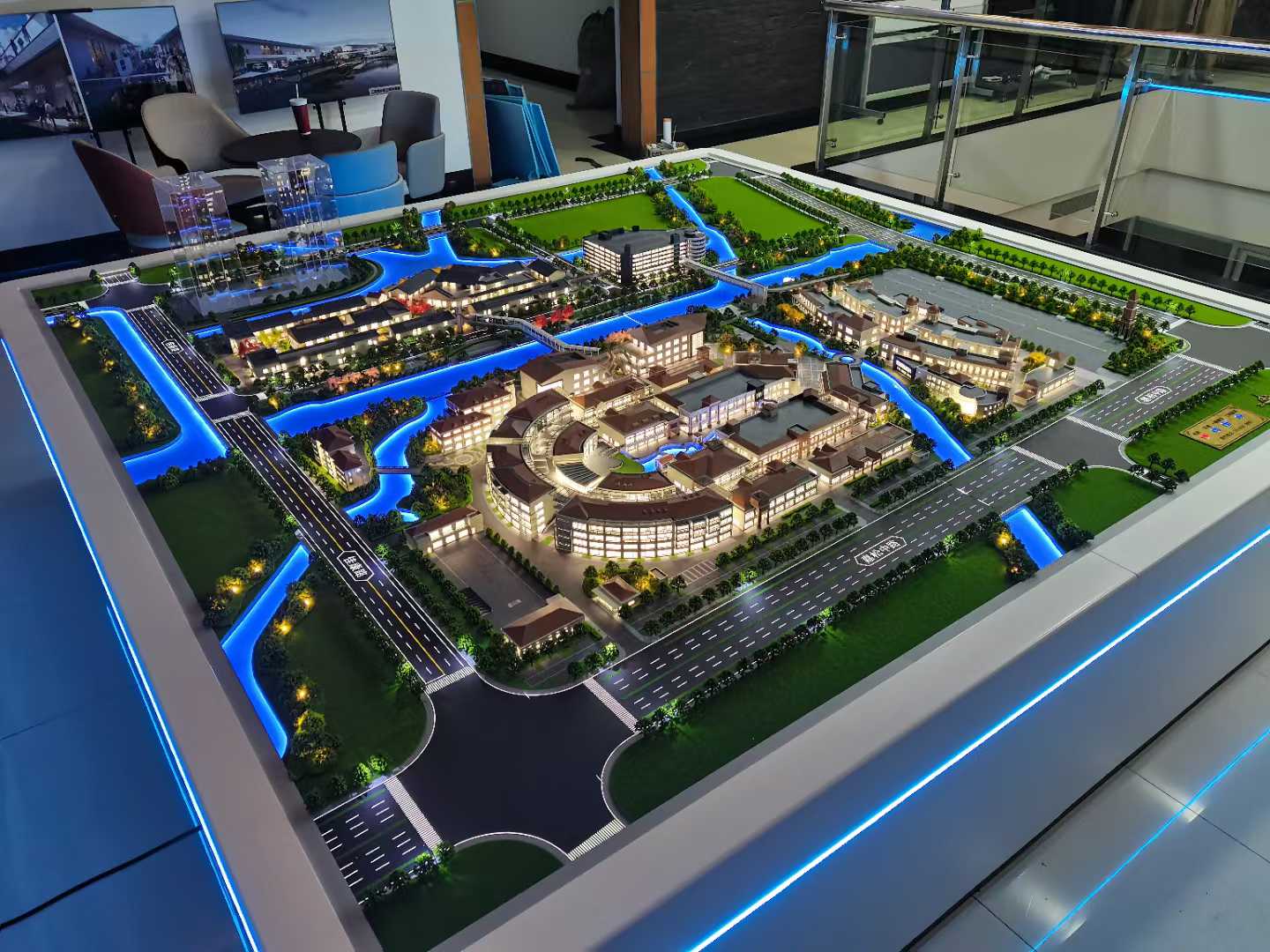
Let us break down what makes a model ultra‑realistic.
Detailed Building Facades
Laser‑etched window patterns.
3D printed cornices, balconies, and roof equipment.
Realistic colors and textures (brick, stone, glass).
Landscaping with Individual Trees
No generic green foam.
Each tree is hand‑made from wire and flocking.
Different species, sizes, and colors.
True‑to‑Life Water Features
Clear epoxy resin with depth.
Ripples, fountains, and reflections.
Blue‑green tint for natural water bodies.
Accurate Street Furniture
Benches, streetlights, planters, trash cans, bus stops.
Tiny cars and pedestrians for scale.
Terrain and Topography
Sculpted hills, valleys, and slopes.
Realistic ground textures (sand, grass, pavement).
Lighting for Night Scenes
Hidden LEDs create warm glows from windows.
Streetlights illuminate the model.
Integration with Mobility Analysis
A Urban Traffic Planning Sand Table Model can be a layer within the high‑simulation model – showing realistic roads and vehicle flow.
Materials for High Simulation Models
Only premium materials achieve ultra‑realism.
Cast acrylic – For glass facades and water.
3D printed resin (SLA) – For fine details like railings and statues.
Realistic flocking – For grass and tree canopies (multiple green shades).
Fine silica sand – For beaches and ground cover.
Model railway trees – Professionally made, not DIY.
Micro LEDs – For subtle interior lighting.
Epoxy resin – For water features (self‑leveling, bubble‑free).
Brass and steel wire – For hand‑made trees and light poles.
Every material is chosen for visual authenticity.
The Custom Production Process for High‑Simulation Models
A high‑simulation model cannot be rushed.
Here is the typical workflow.
Step 1: Data Collection and Artistic Brief
You provide site plans, elevations, and reference photos.
The model maker studies the character of the place.
Step 2: Scale Selection
Common scales for high simulation: 1:100 to 1:500.
1:200 is ideal for detailed facades and landscaping.
Step 3: Digital Modeling and Fabrication
Buildings are 3D printed or laser‑cut.
Facade details are etched or printed.
Step 4: Hand Painting and Finishing
Each building is painted by hand.
Weathering and shadows are airbrushed.
Step 5: Landscaping and Tree Placement
Hundreds of individual trees are glued.
Lawns are flocked with electrostatic applicators.
Step 6: Water and Lighting
Resin poured in layers.
LEDs installed and hidden.
Step 7: Quality Control Under Magnification
Every square centimeter is inspected.
Dust removed with ionized air.
A High Simulation Urban Planning Sand Model typically takes 12 to 20 weeks.
Applications for High‑Simulation Models
Where do these museum‑quality models shine?
Luxury Real Estate Sales Centers
Buyers expect perfection.
A high‑simulation model delivers.
Investor and Developer Presentations
Show the level of quality you will build.
Public Museums and Visitor Centers
Educate tourists about the city’s development.
Government Pavilion Exhibitions
Attract crowds at trade shows.
Professional Competitions
A high‑simulation model impresses juries.
Case Study: High‑Simulation Model Wins International Planning Award
A coastal city planned a new waterfront district.
They wanted to showcase the design at an international urban planning conference.
They commissioned a High Simulation Urban Planning Sand Model at 1:200 scale.
The model featured hand‑painted brick facades, realistic resin water, and 1,200 handmade trees.
The model won “Best Exhibition” at the conference.
It attracted global investors and was featured in architecture magazines.
The model cost 200 million.
Cost Factors for High‑Simulation Models
High simulation costs more – for good reason.
Level of facade detail – Basic vs. full architectural ornament.
Number of trees – 100 vs. 2,000.
Water complexity – Simple pond vs. river with ripples.
Lighting – None vs. full LED system.
Scale – 1:100 costs more than 1:500 (more detail, more area).
Typical range: 150,000 for a large, highly detailed city model.
How to Choose a Maker for High‑Simulation Models
Not every model shop can achieve this level.
Portfolio of realistic models – Look for close‑up photos.
In‑house 3D printing and laser cutting – Precision is key.
Artistic skill – Hand painting and weathering.
References from luxury developers or museums – Call two.
Ask for a sample of a building facade with window mullions at your desired scale.
Maintaining a High‑Simulation Model
These models are delicate.
Always keep the acrylic cover on – Dust is the enemy.
Never wipe the model directly – Use compressed air only.
Repair fallen trees with tweezers and UV glue – Do not use super glue (fogs acrylic).
Annual professional cleaning recommended.
Common Mistakes to Avoid
Do not use cheap materials.
Plastic trees and painted water look fake.
Do not skip the protective cover.
Dust ruins the realism.
Do not rush the maker.
High simulation takes time – respect the craft.
Do not choose a scale too small.
At 1:1,000, you cannot see window details.
Integrating with Other Planning Tools
A high‑simulation model can coexist with more technical models.
For mobility studies, an Urban Traffic Planning Sand Table Model uses abstract colors for congestion – your high‑simulation model is for presentation, not analysis.
For a professional custom build, a Professional City Sand Table Model may trade some realism for speed – your high‑simulation model is the luxury version.
For public facility planning, a Public Facility Planning Scale Model focuses on catchment areas – your model focuses on beauty.
For the city‑wide view, a City Overall Layout Sand Table Model uses massing blocks – your model zooms in on a signature district.
For light shows, an Urban Planning Scale Model with Light System adds animations – your model may include subtle lighting as well.
Each type serves a different purpose. High simulation is for impact.
Future Trends in High‑Simulation Sand Models
Photogrammetry textures – Real building facades mapped onto 3D prints.
Living moss – Real preserved moss for ultra‑realistic lawns.
Miniature working features – Tiny water pumps for real fountains.
Augmented reality overlays – Scan the model to see interior renders.
Yet the core remains.
People love beautiful, realistic miniatures.
A High Simulation Urban Planning Sand Model will never go out of style.
Conclusion
A High Simulation Urban Planning Sand Model is the pinnacle of the model maker’s art.
It turns a city plan into an emotional, unforgettable experience.
Invest in premium materials and skilled artisans.
Protect your model with a high‑quality cover.
Use it for the most important presentations.
Whether you are a developer, city planner, or museum curator, a high‑simulation model will leave a lasting impression.
And remember – whether you need an Urban Traffic Planning Sand Table Model for technical analysis, a Professional City Sand Table Model for reliable accuracy, or any other specialized model, high simulation is the ultimate expression of care and quality.
Model your city with realism. Inspire belief.


