Real Estate Marketing Architectural Sand Model
Introduction
Selling real estate is about emotion.
Buyers need to see their future home.
Digital renderings are useful.
But they feel distant.
A physical model creates connection.
Specifically, a Real Estate Marketing Architectural Sand Model.
This guide explains why it works.
How to choose the right type.
And how to maximize your return on investment.
Let us begin.
What Is a Real Estate Marketing Architectural Sand Model?
It is a physical miniature of a property development.
Built on a sand‑textured base.
A Real Estate Marketing Architectural Sand Model shows homes, roads, parks, and amenities.
It is placed in a sales gallery, exhibition booth, or developer’s office.
Buyers walk around it.
They point at available units.
They imagine living there.
This is not an architectural study model.
It is a sales tool, designed to close deals.
Why a Sand Model for Real Estate Marketing?
Marketing is about storytelling.
A sand model tells the story of a community.
With a Real Estate Marketing Architectural Sand Model, buyers understand the layout instantly.
They see how close the pool is to their unit.
They spot the playground near their future back door.
Also, a model builds trust.
It shows you have invested in their experience.
It makes the abstract master plan feel real.
For developers, a model speeds up the sales cycle.
Buyers decide faster when they see the whole picture.
Key Features of an Effective Marketing Model
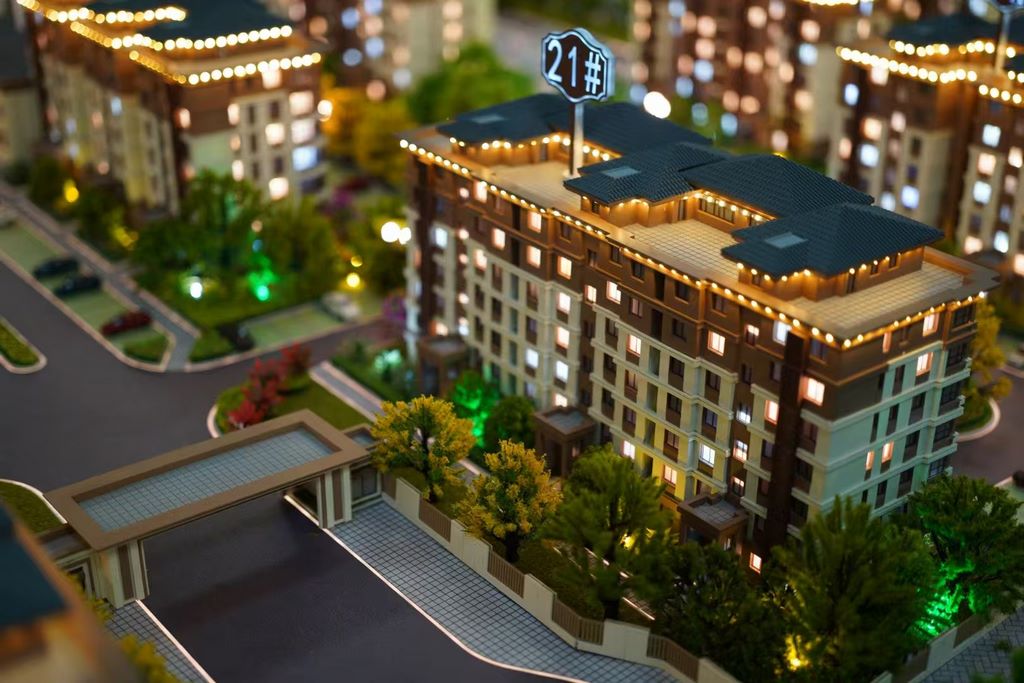
Let us break down what makes a real estate sand model sell.
Appropriate Scale for Clarity
Common scales: 1:100, 1:200, or 1:300.
For a large community, 1:300 fits on a 1m x 1m table.
For a single building, 1:100 shows unit details.
Clear Unit Identification
Available homes highlighted with LED lights or small flags.
Sold units marked differently.
This urgency drives decisions.
Realistic Landscaping
Parks with miniature trees.
Swimming pools with blue resin.
Streetlights and benches.
Landscaping makes the development feel desirable.
Durable Construction
Marketing models are touched daily.
Buildings must be securely glued.
A clear acrylic dust cover is recommended.
Optional Lighting
Interior LEDs make the model visible in dim sales centers.
Path lights guide the eye.
A well‑crafted Real Estate Marketing Architectural Sand Model becomes the centerpiece of any sales gallery.
Types of Marketing Sand Models
Depending on your project, different model types work best.
Single Building Model
For a condo tower or apartment block.
Shows unit layouts, balconies, and roof amenities.
Community Master Plan Model
For a housing development with multiple phases.
Shows streets, parks, schools, and retail.
Topographic Landscape Model
For hillside or waterfront properties.
Emphasizes views, slopes, and natural features.
Hybrid Digital‑Physical Model
A physical base with a tablet overlay showing unit prices and availability.
Each type can be customized.
A Real Estate Marketing Architectural Sand Model should match your project’s unique selling points.
Materials and Production
Marketing models balance cost, speed, and beauty.
Laser‑cut MDF or acrylic – For buildings.
3D printed resin – For unique shapes like curved towers.
Fine sand and textured paint – For ground.
Flocking and miniature trees – For landscaping.
Blue epoxy resin – For pools and water features.
LED strips – For lighting (optional).
Production time: 4 to 8 weeks.
Cost range: 30,000 for a large master‑planned community with lighting.
Case Study: Sand Model Doubles Sales Velocity
A developer in Florida launched a 200‑unit condominium.
Sales were slow – 5 units per month.
They installed a Real Estate Marketing Architectural Sand Model in their sales center.
The model showed the pool, the beach access, and the garden courtyards.
LEDs highlighted available units.
Buyers could see exactly which unit faced the ocean.
Sales jumped to 12 units per month.
The model cost 3.5 million in revenue.
That is a 233x return in the first month.
Display Tips for Maximum Impact
Where and how you display the model matters.
Center of the Sales Gallery
Place it on a low pedestal table.
Buyers can walk around it.
Soft, Warm Lighting
Spotlights from above.
No harsh fluorescent lights.
Legend Panel
Explain colors and symbols.
“Green = available, red = sold.”
Magnifying Glasses
Buyers love tiny details.
Provide a few on leather straps.
Keep It Clean
Dust the cover daily.
A dirty model repels buyers.
Integrating Other Model Types
Sometimes a single marketing model is not enough.
You may need complementary models for different purposes.
For a Large Complex Architectural Scale Model of a downtown district, you might place it in a separate investor room.
An Architectural Scale Model with LED Lighting can be used for evening events – the lit model creates a dramatic atmosphere.
For a golf course community, an Outdoor Landscape Architectural Sand Table Model focuses on fairways and water hazards.
When selling ultra‑luxury penthouses, a High Precision Architectural Building Scale Model at 1:50 scale shows every detail of the finishes.
And for quick take‑home gifts for serious buyers, a Small Size Architectural Sand Table Model(desktop version) keeps the project top of mind.
Each type serves a different moment in the sales journey.
Cost Factors for Real Estate Marketing Models
Pricing depends on several variables.
Table size – 1m x 1m vs. 2m x 3m.
Number of buildings – 5 buildings vs. 200 buildings.
Detail level – Basic shapes vs. fully detailed facades with window mullions.
Landscaping density – Simple grass vs. detailed parks, pools, and playgrounds.
Lighting – No lighting vs. full LED system.
Shipping and cover – Add 15–20%.
Typical range: 35,000.
Always ask for a quote that includes a dust cover and spare parts kit.
How to Choose a Model Maker for Marketing
Not every model maker understands real estate sales.
Look for a portfolio of residential and mixed‑use projects
Ask about turnaround time – Marketing timelines are tight.
Check references from developers – Call two.
Request a sample of miniature trees and water resin
Avoid makers who only do industrial or infrastructure models – they may not capture the emotional appeal needed for home sales.
Maintenance for Long‑Term Use
Marketing models are used daily.
Dust the cover every morning – Use a microfiber cloth.
Check for loose trees or flags weekly – Glue back immediately.
Test LEDs monthly – Replace burnt bulbs.
Keep away from direct sunlight – Fading makes the model look old.
With care, your Real Estate Marketing Architectural Sand Model will last 5–7 years.
Common Mistakes to Avoid
Do not choose a scale too small.
At 1:500, individual homes become unrecognizable.
Do not skip the landscaping.
A development without trees and parks looks barren.
Do not use cheap, shiny materials.
Glossy roads look like plastic – use matte paint.
Do not forget building numbers.
Buyers need to identify specific units.
Do not place the model in a dark corner.
It must be the first thing buyers see.
Future Trends in Real Estate Marketing Models
Technology is enhancing physical models.
Augmented reality – Scan the model to see unit interiors or sunset views.
Interactive LED pricing – Tap a unit to see its price on a screen.
Modular phases – Swap out sections as new phases release.
Eco‑friendly materials – Recycled acrylic and biodegradable flocking.
However, the core remains.
Buyers need to see and touch their future home.
A physical sand model does that better than any screen.
Conclusion
A Real Estate Marketing Architectural Sand Model is the most powerful sales tool for property developers.
It turns floor plans into emotions.
It speeds up decisions.
It pays for itself many times over.
Choose the right scale and detail level for your project.
Invest in quality landscaping and lighting.
Display it prominently in your sales center.
If you are launching a new development, start the model process early.
Contact two or three reputable makers.
Request quotes and sample tiles.
Your buyers will see their dream home.
And they will say yes.
And remember – whether you need a Large Complex Architectural Scale Model for a downtown district, an Architectural Scale Model with LED Lighting for dramatic evening events, an Outdoor Landscape Architectural Sand Table Model for a golf course community, a High Precision Architectural Building Scale Model for luxury penthouses, or a Small Size Architectural Sand Table Model as a client gift, each serves a specific marketing goal. Start with a central sales model, then expand your toolkit.


