Industrial Production Plan for New Energy Vehicle Models
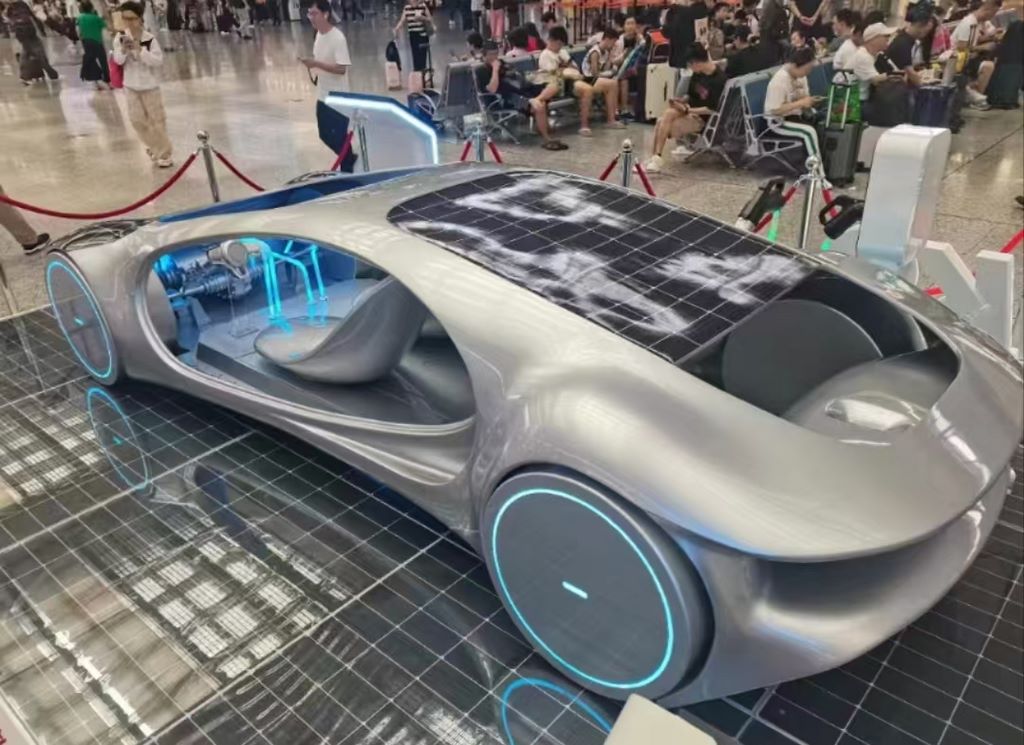
I. Frame and Body Forming
Alloy Frame Casting
The main frame is cast using ZAMAK-3 zinc alloy. The mould is calibrated using a coordinate measuring machine to ensure that the installation error of the suspension system is ≤0.1mm.
The roof and side panels are made of ABS plastic injection moulding, ultrasonically welded to the frame, with seams finished using Japanese Tamiya AB putty.
Glass Component Processing
The front windscreen is made of 2mm thick polycarbonate sheet thermoformed, with an inner conductive film coating to simulate HUD projection effects.
The sunroof section features laser-etched grid patterns, with the back sprayed in semi-transparent smoky grey (Tamiya X-19).
II. New Energy Features and Details
Power System Reproduction
The battery pack uses an aluminium alloy CNC-machined honeycomb structure, with etched plates applied to the surface to simulate cooling pipes.
The charging interface incorporates a magnetic attachment structure, compatible with a 1:18 scale charging gun for realistic plug-and-play functionality.
Aerodynamic Components
The front lip spoiler is 3D-printed using photosensitive resin, with a chrome-plated surface and a matte finish
The wheel arch covers are made of aluminium alloy spun-formed, with the perforated sections electrochemically etched to create blade-like textures
III. Painting Process
Multi-layer spraying system
Primer: Epoxy electrophoretic coating (grey) fully immersed, sanded with 200-grit volcanic ash
Topcoat: Three coats of water-based pearlescent paint, three bakes, with a 0.15mm airbrush used for manual blending in gradient areas
Clearcoat: Two-component polyurethane clearcoat, cured at 60°C, followed by mirror polishing
New Energy-Specific Effects
Headlight assemblies incorporate 3D-printed light guides connected to micro-LED modules to achieve dynamic daytime running light effects
Chassis sprayed with fluorescent green (GSI GX209) to indicate high-voltage cable routing


