I. Main Structural Design
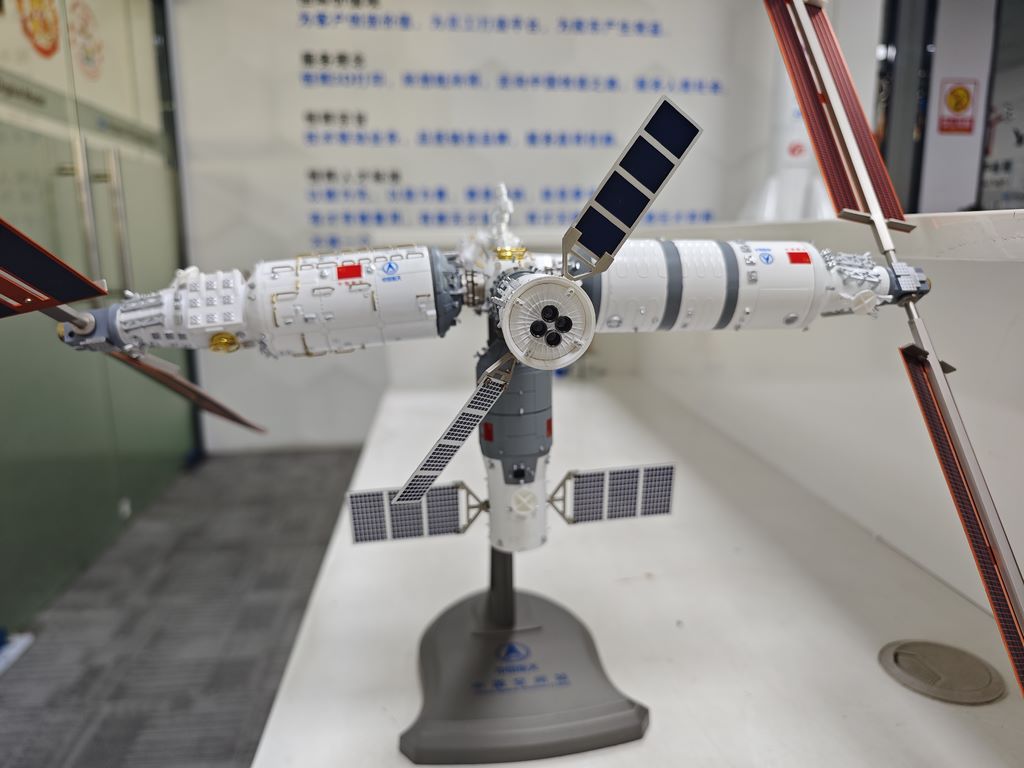
T-Shaped Basic Framework
Adopting the classic layout of the Tiangong Space Station, the core module is positioned centrally with symmetrical laboratory modules on both sides to form a stable structure. The docking mechanism contours should be clearly visible at module connections, while maintaining exterior handrails and equipment interface features.Modular Detachable Design
Each module connects via magnets or snap fasteners, allowing disassembly to showcase individual components. The core module should include forward/aft docking ports for attaching miniature crewed and cargo spacecraft models.
II. Enhanced External Features
Visualized Power System
Solar arrays with foldable design to demonstrate deployed and stowed configurations
Distinct color differentiation between perovskite (dark blue) and traditional silicon-based (light blue) solar panels
Functional Area Markings
Payload bay outlines and observation windows printed on laboratory module exteriors
Attitude control thrusters and communication antenna positions labeled on core module surfaces
III. Display Optimization Suggestions
Proportional Coordination
At 40cm total length, allocate 40% to core module and 30% to each lab module to prevent solar array overcrowding
Maintain module diameters between 3-5cm for visual balance
Dynamic Display Elements
Integrate rotating base motor for slow axial rotation (3rpm)
Configure 5° adjustment freedom at solar array roots to simulate sun-tracking
This solution emphasizes critical external characteristics of space stations within limited dimensions, preserving authentic engineering logic while enhancing interactivity through modular design. Recommended materials include ABS plastic combined with aluminum alloy, with matte surface treatment to minimize glare interference.


