Case study of model production for a complete automated production line
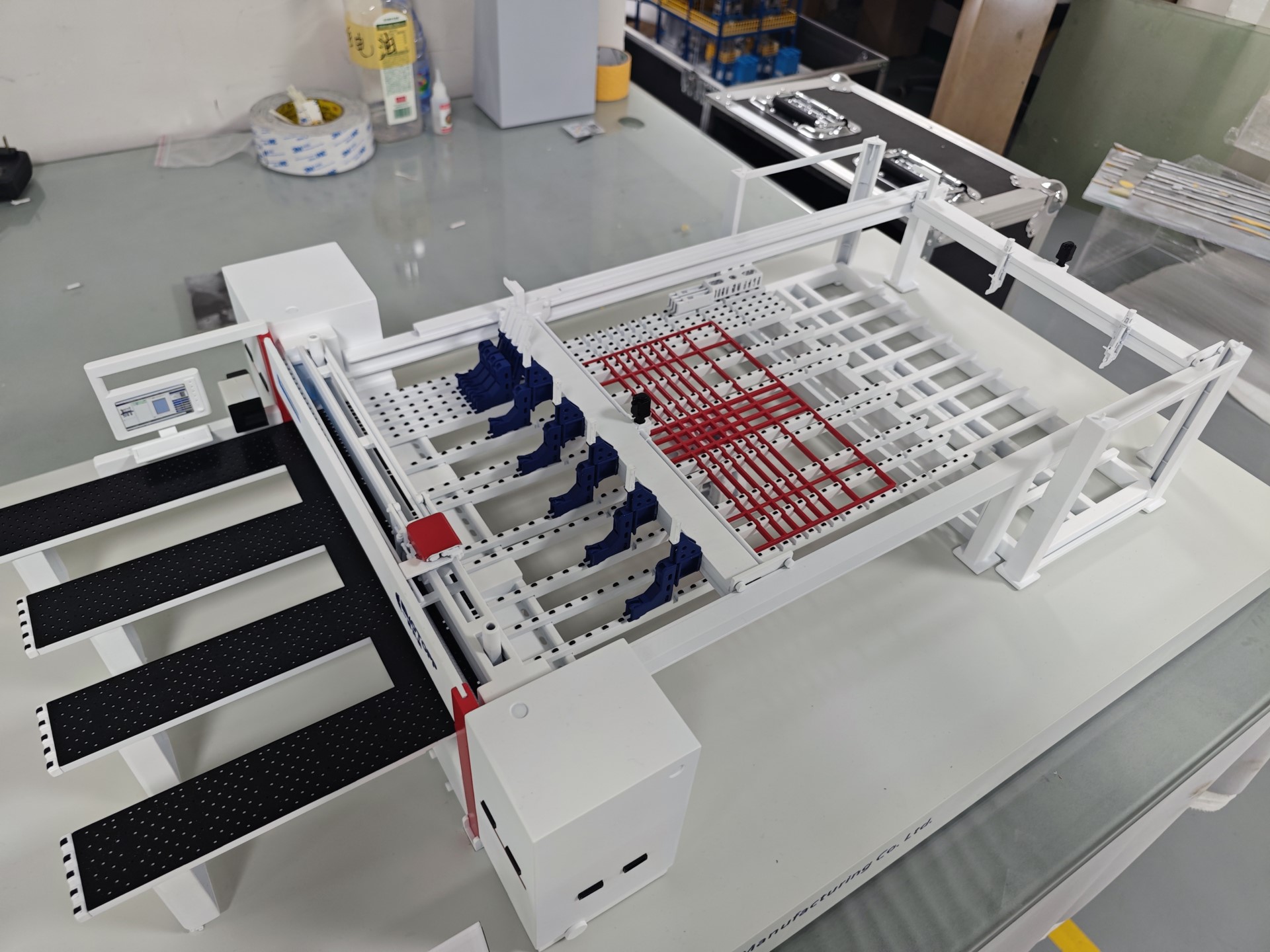
This case takes a physical model of an automated production line as an example, fully presenting the manual production process from scratch. The model strives to restore the industrial beauty and operational logic of real equipment, and the final product simulation degree reaches about 90%, with excellent visual effects and detail expression.
1、 Material selection and preparation
The core principles of material selection for model making are "simulation, ease of processing, and stability". The main structure is made of light wood and oak boards of different thicknesses, which are very suitable for building racks and platforms due to their soft texture, easy cutting and shaping. Components such as robotic arms and motor housings that require industrial strength are made of ABS plastic sheets through hot bending, and their stiff texture can simulate metal effects very well. The conveyor belt is made of black rubber and uses thin metal rods as rollers inside to ensure both structural strength and actual rolling of the conveyor belt. In addition, micro screws, bearings, adhesives, etc. are also prepared for connection and fixation.
2、 Production process flow
The entire production process follows the logic of "from big to small, from framework to detail".
Firstly, proceed with the construction of the main structure. According to the design drawings, the light wood and ABS board are finely cut and assembled into the white main frame and workbench of the production line using glue and screws, ensuring a stable and horizontal overall structure.
Next is the assembly of mechanical units. The robotic arm is the core highlight, with its joint parts pre drilled with small drill bits, embedded with movable metal bearings, and assembled with thin screws to achieve the real motion of the arm body being rotatable and liftable. The control unit on the side is made of thin plastic sheets stacked together, and the screen area is hollowed out and lined with semi transparent plastic sheets to simulate a luminous screen effect.
Finally, install the transmission system. Insert the cut black rubber belt onto the metal rod roller, adjust the tightness to ensure smooth operation of the conveyor belt. The entire assembly process requires great patience, continuous assembly, debugging, and correction to ensure coordinated movement of each component without interference.
3、 Post processing and coloring
Coloring is a crucial step in imbuing the model with soul and enhancing its realism.
Firstly, perform surface pretreatment. All wooden and plastic parts should be thoroughly sanded with fine sandpaper, especially to clean the joints and burrs. Then, a layer of gray water should be sprayed to fill the soil, unify the base color, and check for defects.
Then enter the spraying stage. Use a spray pen to spray the main color, and spray matte white paint on the main frame and countertop to create a clean industrial environment. The robotic arm is covered and sprayed with bright blue to highlight its core position. The conveyor belt rollers and some structural components are sprayed with dark gray and black to create color contrast.
Finally, there is aging and detailed depiction. Dip a very fine facial pencil into a small amount of dark brown stain solution to outline panel gaps and mechanical structure gaps, simulate oil stains and shadows during use, and enhance the sense of three dimensionality. Use dry scanning technique to lightly scan silver on the edges of the conveyor belt and the joints of the robotic arm, imitating the traces of metal wear. The screen is hand drawn with blue and white to create a display interface.
Through the above process flow, the final completed model not only highly restores the static appearance, but also dynamically demonstrates the automated production process with its movable robotic arm and conveyor belt. The entire production process does not require complex technical parameters, relying on manual craftsmanship and appropriate material selection, successfully reproducing the sense of technology and industry of automated production lines.


