Case study of bus model production: artistic restoration based on pure electric buses
1、 Material selection and structural design
1. Selection of main materials
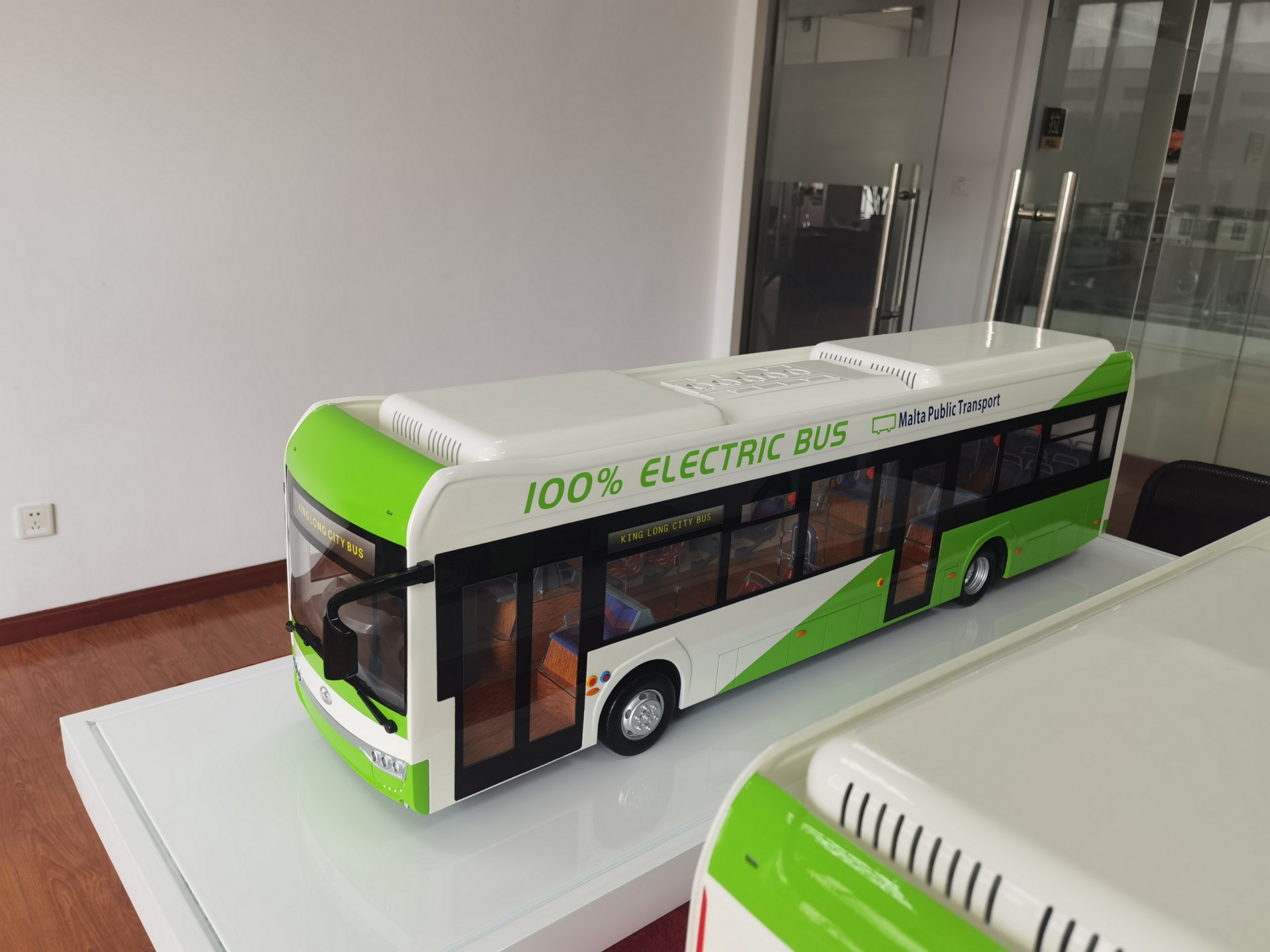
Using ABS engineering plastic sheet as the main material for the bus body, it combines rigidity and toughness, making it suitable for shaping the square outline and rounded corner transitions of buses. The car window is made of 0.8mm thick transparent acrylic sheet, and the straight lines of the window frame are ensured through laser cutting. The roof battery pack module is carved with high-density foam, and its surface is covered with ABS sheet to simulate the cooling grid.
2. Detail component craftsmanship
Wheel system: The wheel hub is made using resin flipping technology, and the tires are made of soft silicone material, which is restored to the tread pattern through hot pressing molding. The axle is made of brass rod to ensure smooth rotation.
Door structure: The front and rear doors adopt a "nested" design, with an ABS frame on the inner layer and a 0.2mm thin copper sheet pasted on the outer layer to simulate a metallic texture. The door handles are bent with 0.3mm copper wire.
Rearview mirror: Cut and polish with an acrylic rod, spray silver metallic paint, and fix it on both sides of the car door with micro screws.
2、 Production process
1. Vehicle body forming process
First, make a 1:24 ratio wooden mold, heat the ABS board to a softened state, and then vacuum form it to form the body of the car. The roof air conditioning unit adopts the "splicing+carving" process: first cut the basic shape with ABS board, and then finely carve the heat dissipation holes and ventilation grille with a carving knife. After filling the seams of the car body with soil, gradually polish them with 400 mesh, 800 mesh, and 1200 mesh sandpaper to ensure a smooth and flawless surface.
2. Painting process
Primer treatment: Spray gray epoxy primer on the entire vehicle, bake for 2 hours, and then lightly polish with 2000 grit sandpaper to remove surface particles.
Main color coating: Using the "color separation cover" method, first use masking tape to accurately cover the green area, and spray pure white topcoat (2 times, with a 30 minute interval between each coat); Cover the white area again and spray special fluorescent green paint (3 thin coats) to ensure uniform and full color.
Identification production: The words "100% ELECTRIC BUS" on the vehicle body are printed using water transfer printing technology and covered with transparent protective paint; The company logo is printed on thin film through UV printing and then pasted on the side of the car body.
3. Interior restoration
The seats in the car are cut from ABS board and coated with brown simulated leather on the surface. The armrest is made of 0.5mm stainless steel wire bent, and the roof light box is made of a light guide plate, with built-in micro LED light strips to simulate lighting effects. The dashboard in the cockpit is made with stickers and adhesive technology to create a three-dimensional display effect.
3、 Post processing
1. Treatment of aging effect
Car body aging: Dip a small amount of black enamel paint with a fine brush, gently sweep along the gaps of the car door, wheel arches, and other areas to simulate the accumulation of dust in daily use. Dip a sponge in light gray paint at the edge of the car roof and lightly tap to create a natural fading effect.
Tire wear: Use silver paint to dry sweep the side of the tire, highlighting the contact wear marks between the wheel hub and the tire; Fill the gaps in the tread with black oil paint and wipe to enhance the three-dimensional effect.
2. Scene adaptation
Create a compatible bus stop scene: The platform floor is made of gray PVC board and covered with simulated floor tile stickers; The bus shelter is constructed by cutting acrylic panels and installing a miniature solar panel model on the top. After spraying light gray primer on the ground, hand draw zebra crossings with white paint to create a realistic street atmosphere.
4、 Key points of restoration control
Color restoration: Through color card comparison, the color difference between the green area and the prototype car is controlled within a range that is difficult to distinguish with the naked eye. The white roof is coated with matte paint to avoid reflection affecting the visual effect.
Proportional accuracy: Strictly produced in a 1:24 ratio, the length and width errors of the vehicle body are controlled within ± 0.3mm, and the wheelbase is completely consistent with the prototype car.
Detail enhancement: The roof charging interface is made of metal etched sheets, and the wipers are made of memory metal materials that can be manually adjusted for angle; The ventilation openings on the side of the vehicle are formed by drilling holes with a 0.1mm drill bit, and the holes are evenly arranged.
Through the above process, the model achieves a reproduction degree of over 90% of the prototype car in terms of overall shape, color matching, and detail expression. Whether it is static display or dynamic demonstration with matching scenes, it can vividly present the modern beauty and technological texture of pure electric buses.


