Engineering ship model offshore operation ship model making for display or collection
Case Study of Engineering Ship Model Making
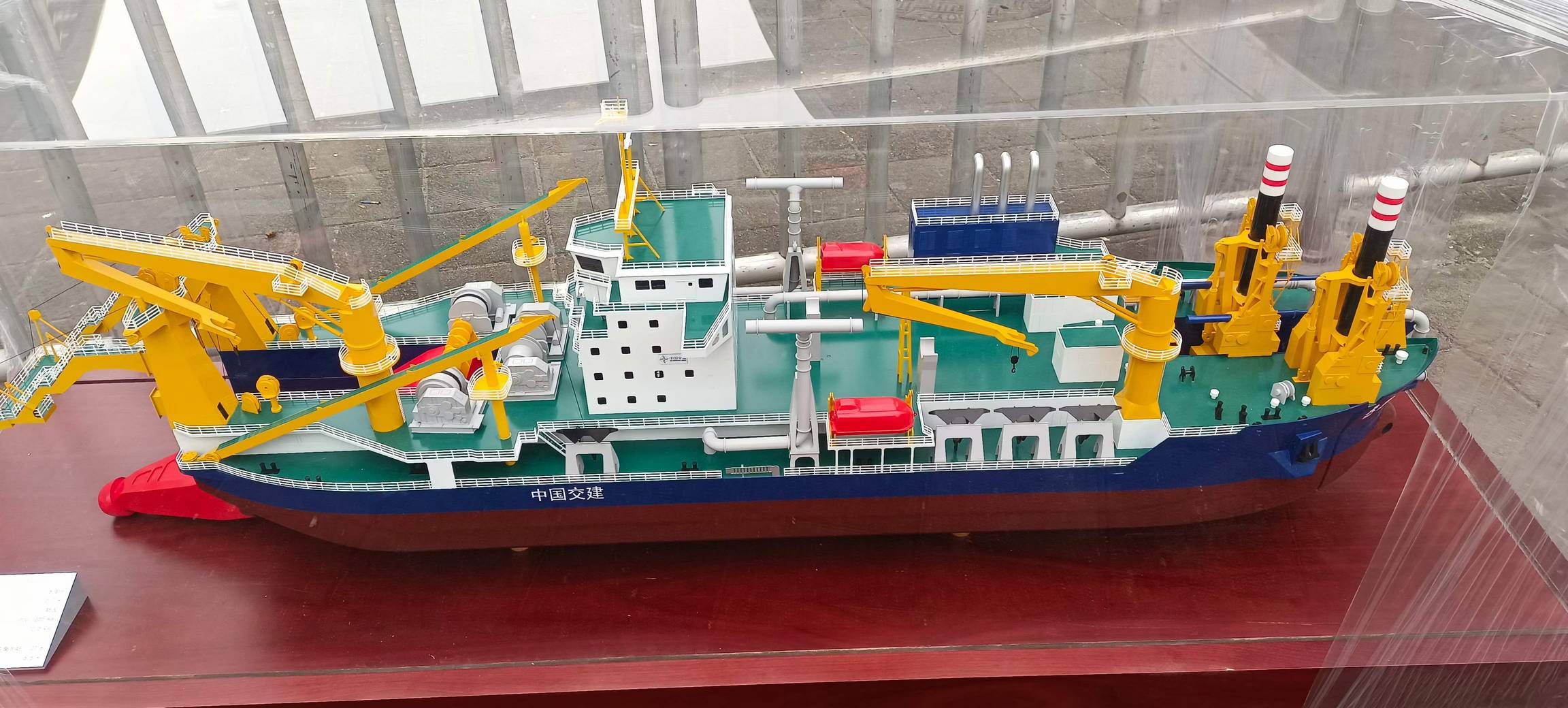
This project is a model of an engineering ship, based on a large construction vessel as a prototype. It accurately reproduces the ship's structure, deck equipment, and layout of operational functions, achieving a realistic reproduction rate of over 90%. It is suitable for enterprise exhibition halls, trade shows, investment promotion, and technology popularization scenarios.
1、 Material selection
Main body of the ship: made of composite material of fiberglass and ABS sheet, balancing structural strength and curved surface modeling ability, ensuring smooth ship line shape and stable structure;
Deck and superstructure: The deck is made of simulated wood textured PVC panels, while the superstructure and cabins are made of ABS panels and 3D printed photosensitive resin, restoring details such as doors, windows, and cabins;
Homework equipment: Core components such as cranes, pipelines, chimneys, etc. are made of 3D printed photosensitive resin and metal textured ABS to ensure detail accuracy and mechanical texture;
Auxiliary materials: model specific adhesive, sandpaper, matte varnish, multi-color spray paint, UV printed identification stickers, etc., to enhance the durability and visual effect of the model.
2、 Production process
Hull shaping
Using fiberglass as the base, the hull shell is integrally formed through molds, and the curved contours and waterline features of the bow and stern of the ship are polished and restored; Splicing ABS sheets to make a deck platform, leveling and reserving equipment installation positions.
Superstructure and cabin fabrication
Cut and splice ABS boards into multiple layers of superstructure, and restore details such as windows, railings, stairs, etc. through bonding and polishing; The internal structure of the cabin is assembled through 3D printing components to enhance the sense of spatial hierarchy.
Assembly of homework equipment
3D printing cranes, pipelines, chimneys and other operational equipment, accurately bonded and fixed according to the deck layout; The crane arm adopts a movable structure design to restore the working posture; Position the pipeline and valve components one by one and simulate the direction of the system.
integral assembly
Assemble the hull, superstructure, and deck equipment, adjust the center of gravity and balance, and ensure that the model is placed smoothly; Paste safety facilities such as guardrails and escalators, and improve scene details.
3、 Post processing and coloring
Hull coating: The bottom of the ship is sprayed with reddish brown, the hull above the waterline is dark blue, and the deck is dark green. The identification of the hull structure is strengthened through color separation spraying;
Equipment and Detail Coloring: Components such as cranes and railings are sprayed with eye-catching yellow, while chimneys are painted with black background and red and white rings to restore the warning and identification features of real equipment; The superstructure is based on white with light gray accents in some areas to enhance the sense of hierarchy on the facade;
Identification and protection treatment: The ship name and corporate logo are accurately pasted on the side of the hull through UV printing, which is clear and eye-catching; The overall matte varnish is sprayed to enhance the wear resistance and dust resistance of the model, while retaining the texture of the material and avoiding the visual realism of the paint surface being affected by excessive brightness.
4、 Detail optimization and presentation of effects
Thoroughly polish and adjust the model, repair splicing gaps, correct equipment spacing and pipeline routing, and ensure that the overall layout is consistent with the real scene; Clean up surface impurities to make the appearance neat and uniform; Test the stability of the structure to avoid loosening and detachment of components. The final product, through the synergy of materials, processes, and colors, fully presents the operational functions and appearance characteristics of engineering ships, with both ornamental and educational value, meeting the diverse needs of enterprise display, technical exchange, and brand promotion.


