Manufacturer of Intelligent Aquaculture Sand Table Models
Detailed Process of Smart Farming Sandbox Model Production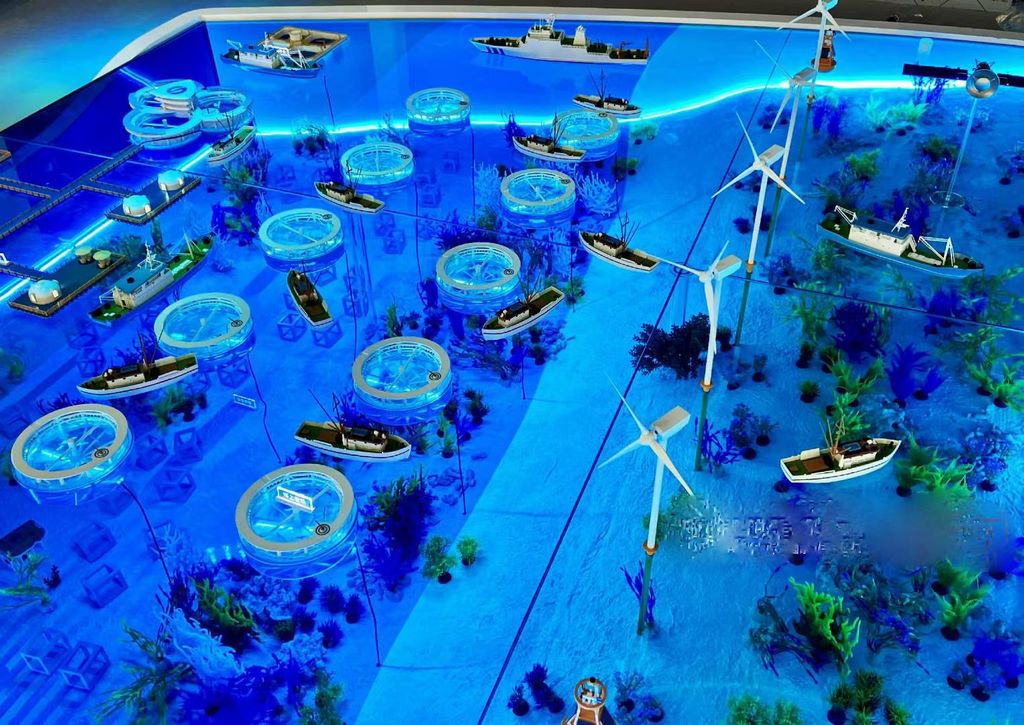
I. Drawing Development and Material Preparation
Drawing Conversion
After receiving the CAD drawings of the farm provided by the client, the technical team spent three days converting them to a 1:50 scale:
Using an acrylic laser cutter, the building outline was divided into a base plate layer (5 mm transparent), a wall layer (3 mm frosted), and an equipment layer (2 mm hollow)
Farming pens are CNC-machined from ABS sheets to preserve the original design curvature of details such as feed troughs and water pipes
Six key areas specified by the client (e.g., automatic feeding towers, environmental control sensor clusters) are specially marked
Material List
Main Structure: Imported birch plywood laminate (warp-resistant base) + aviation-grade aluminum profiles (support framework)
Equipment simulation: 3D-printed resin (miniature fans/sensors) + copper etched plates (conveyor belt patterns)
Environmental landscaping: mineral powder mixed with gypsum (floor texture), dyed colored sand (feed pellets)
II. Precision Assembly Process Flow
Layered Construction
First, use UV adhesive to bond the laser-cut acrylic panels in the order of “base plate → pipeline layer → equipment layer.” After each layer cures, use a micrometer to inspect flatness (tolerance ±0.2mm)
The compartment assembly uses a magnetic design for easy disassembly by the customer for display purposes. Each slot is embedded with a miniature LED (simulating disinfection lighting)
Dynamic Component Installation
The automatic feeding system uses 0.3mm enameled wire to simulate a drive chain, achieving slow movement at 10cm/min via a miniature motor
The temperature control module uses a semi-transparent gradient film to replicate the red/blue light state changes during equipment operation
III. Scene Reproduction and Surface Treatment
Environmental Shaping
The ground uses a “three-color gypsum layered casting method”: bottom layer dark brown (soil) → middle layer gray-white (cement pathway) → top layer adorned with green plant fibers (grass residue).
The feed accumulation area is made using electrostatic flocking technology, with feed zones for different growth stages strictly configured according to the customer-provided feeding logs.
Professional-grade coloring
The building structure is coated with automotive-grade metallic paint using a three-layer process (“primer → color coat → matte protective coat”) to prevent fingerprint residue
Equipment rust effects are hand-painted with mineral pigments, with a focus on highlighting oil stain accumulation traces in customer-designated areas (e.g., shaft areas)
Finally, the entire model is coated with a matte protective agent to achieve the diffuse reflection texture of a real farm under exhibition lighting.


