Crafted with precision, the true chapter can be seen in miniature: the birth of an industrial engine model
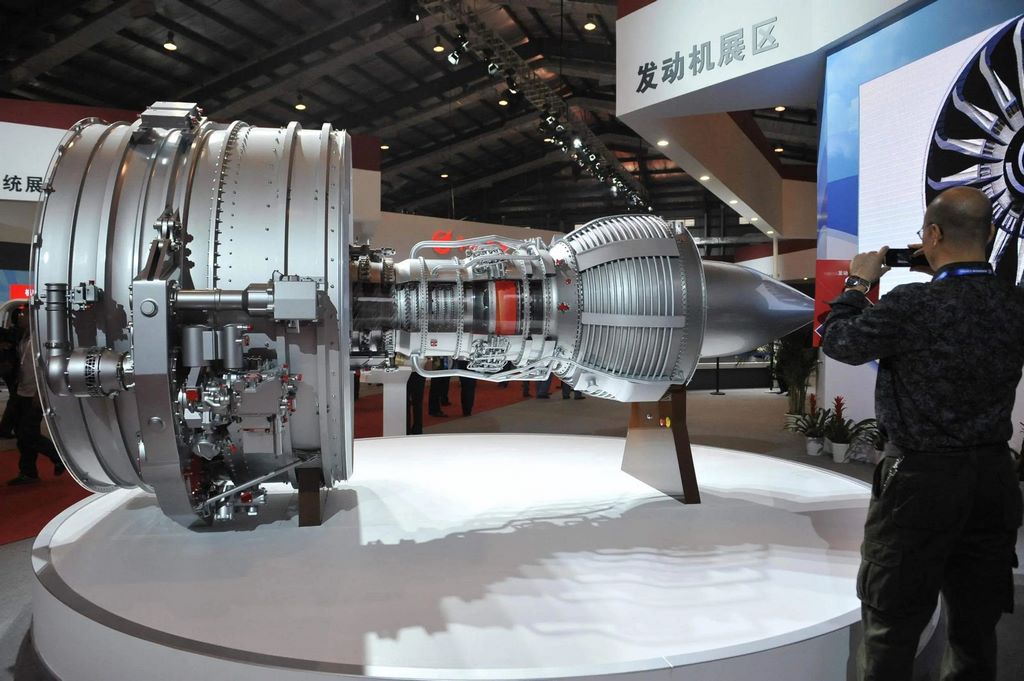
Among the numerous industrial equipment models undertaken by our company, the production of a scaled down heavy-duty engine model for the "Power Core" exhibition area of a large industrial exhibition is a highly representative project. The core requirement of the customer is that the model must be highly realistic, allowing the audience to intuitively feel the grandeur and precision details of the physical device, with a fidelity of over 90%. This means that our work is not simply copying, but a comprehensive test of craftsmanship, patience, and artistic expression.
1、 Craftsmanship planning and high-precision production
After the project was launched, our team first took multi angle photos, measured and meticulously surveyed the actual engine provided by the customer. This is the cornerstone of ensuring the degree of restoration. In the 3D modeling stage, the designer not only accurately reproduced every visible external structure, but also focused on depicting and exaggerating feature details such as heat dissipation fins, intricate pipeline routes, valves, nameplates, etc., to ensure that these key details remain clear and eye-catching even after scaling.
We selected highstrength ABS board and precision aluminum alloy for CNC machining of the main structure of the model. ABS board is easy to cut and shape, and can accurately construct the block body and main casing of the engine; Aluminum alloy is used to manufacture structural components that require a metallic texture, load-bearing capacity, or lightweight characteristics, such as brackets, flanges, and some shell panels. For the most eye-catching core components of the engine, such as the crankshaft, flywheel, and cylinder block, we adopted the lost wax precision casting process. We first used 3D printed photosensitive resin to make a prototype, and then flipped the mold for metal casting. The metal parts obtained in this way not only have a strong sense of weight, but their delicate metal texture on the surface is incomparable to plastic parts, greatly enhancing the texture of the model.
2、 Detail empowerment: the finishing touch of handmade art
The soul of industrial equipment is often hidden in the complex pipelines and nameplates. For the thousands of bolts and nuts in the model, we did not use ready-made standard parts, but instead made them all separately according to the physical style through microfabrication and manually installed them one by one, ensuring that their models and orientations are consistent with the actual objects.
All oil pipes, water pipes, and wiring harnesses are laid using different diameters of soft PVC, silicone pipes, and metal hoses according to the actual layout. Our technicians will first use thin metal wire to make the skeleton of the pipeline, determine the direction, then put on the outer pipe, and finally fix it with micro clamps. This process is extremely patient, but the intricate yet well-organized pipeline system presented in the end is one of the most critical manifestations of model realism.
3、 Post processing and coloring: giving life and a sense of time to the model
If precision machining shapes the "skeleton" of a model, then spray painting injects its "soul". The entire model undergoes strict surface treatment before spraying, including polishing, cleaning, and applying primer to obtain a perfect adhesive substrate.
The painting process follows a rigorous process:
Primer layer: Spray gray primer uniformly and check for surface defects.
Main color layer: Based on the actual color, we have formulated a specialized industrial matte paint. By using a high standard spray gun for multi-layer thin spraying, the paint surface is ensured to be uniform and smooth, without any sagging or orange peel phenomenon, accurately restoring the main color of the equipment when it leaves the factory.
Color separation and identification: Use pre made precision masking stickers to cover and spray different colored areas. For various stickers such as warning signs, brand logos, and operating instructions, we use high-definition water sticker technology to ensure clear patterns, sharp edges, and no excess background, as if printed directly on the machine body.
Aging and texture expression: This is a key step in enhancing realism. No industrial equipment is forever brand new. Our painters use professional cleaning solutions and weathered soil to finely treat areas such as grooves, bolt roots, and pipeline interfaces where oil and dust are prone to accumulate, creating slight oil stains, dust, and usage marks. For high-temperature components such as the exhaust manifold of the engine, we simulated the metal fading and coking effects caused by high-temperature burning through transparent paint.


