Wind-Solar-Storage Integration Sandbox Model Production Process Documentation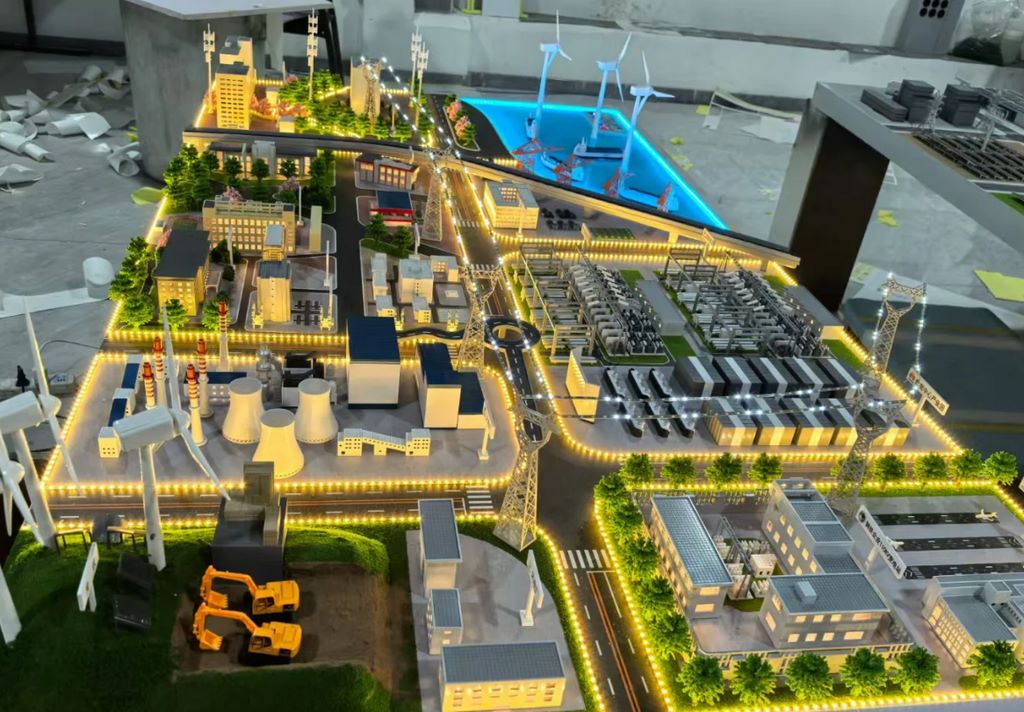
I. Drawing Pre-processing Stage
The CAD drawings provided by the client are first 3D-modeled using a laser scanner. Senior engineers then perform a 1:100 scale adaptation and verification, highlighting key structural features such as the angle of the photovoltaic panel array and the curvature of the wind turbine blades. Using acrylic layered engraving technology, the terrain base is divided into five layers of 2mm-thick panels to ensure natural slope transitions (error ≤ 0.3mm).
II. Core Component Manufacturing Process
Photovoltaic Matrix
Base Material: Matte-finish PETG sheets are selected. After UV printing the circuit patterns on the back panel, a nano-level matte clear coat is sprayed on the surface to prevent glare interference.
Supports: 304 stainless steel etched components are manually bent and secured to the base via a magnetic attachment structure, supporting angle adjustments from 15° to 45°.
Wind Turbine Unit
Blades: 3D-printed photopolymer resin (0.1mm layer thickness), undergoes centrifugal polishing to eliminate layer lines, and is sprayed with gradient gray metallic paint to simulate real wind erosion marks.
Tower: Machined aluminum tubes undergo anodizing treatment, with embedded micro-bearings enabling natural blade rotation.
Energy Storage Container
Cabinet: Assembled from laser-cut ABS panels, with etched heat dissipation hole patterns and an aged finish.
Details: Warning signs reproduced using screen printing technology, with 0.5mm-thick PE anti-slip texture pads applied
3. Scene integration and post-processing
Terrain shaping: Epoxy resin mixed with mineral powder poured as a base, CNC machined into shape, then manually planted with real moss and miniature vegetation
Color System: Color matching based on satellite maps, photovoltaic zones use RAL7035 light gray (color difference ΔE<2), and wind turbine blades have sand deposition effect powder added to the tips
Dynamic Effects: Hidden LED arrays simulate daytime light and shadow changes, and miniature motors drive intermittent blade rotation (speed ≤5 rpm)


